
There’s something almost poetic about the fact that the most honest metaphor for incarceration — being wrung out, spun around, and hung up to dry — is also a literal job description.
Prison laundry has been around as long as prisons themselves. And in almost every era, it has served the same dual purpose: to clean things, and to remind people that they are not clean. That they owe something. That their labor belongs to someone else now. The sudsy innocuousness of it has always been the point.
The Workhouse: Where Laundry Was the Punishment
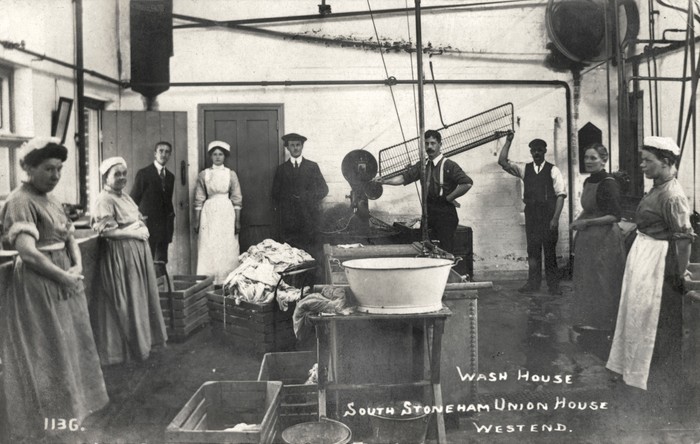
Before we get to The Rock, we need to go further back — to the damp, bone-grinding world of the Victorian workhouse, where laundry wasn’t an assignment. It was a sentence within a sentence.
The English workhouse system formalized in 1834 under the Poor Law Amendment Act was, in theory, a safety net. In practice, it was a mechanism for punishing people for being poor. Men broke rocks and picked oakum — the latter being the unraveling of old rope by hand, thread by thread, until your fingers bled into the hemp fibers. Women and girls got the laundry.
Cooking, cleaning, scrubbing floors, and washing: these were the female inmate’s contribution to the workhouse’s economic self-sufficiency. The laundry room wasn’t a respite from harder labor. It was the hard labor. Hot water. Heavy wet cloth. Hours of wringing. The steam that made it impossible to breathe properly in winter, and made summer inside a workhouse laundry room feel like a slow death.
But here’s the part that slides under your skin if you let it: the laundry also punished. The National Archives preserves a witness statement from Mary Lambhurst, age 14, describing the treatment of inmates at the Wandsworth and Clapham Union workhouse. Among the horrors detailed: a girl named Mary Baines was confined to the laundry for one month as discipline.
Confined to the laundry. As punishment.
The laundry room was both the workstation and the penalty box. You failed, you went to the laundry. You behaved, you went to the laundry. The only difference was whether you got to come back.
Charles Dickens knew what he was looking at. The workhouse he wrote into Oliver Twist was not a grotesque exaggeration. It was a reporting job.
Sing Sing: Where Silence Met the Spin Cycle
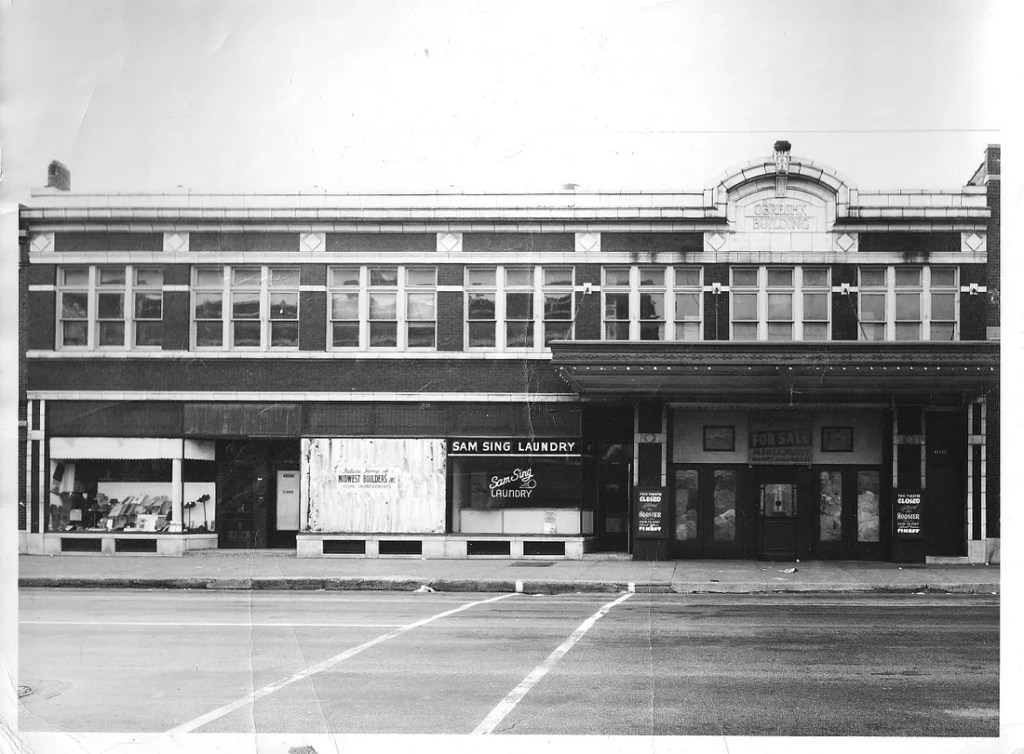
On the eastern bank of the Hudson River, about 30 miles north of Manhattan, convicts built their own prison out of marble in 1826 — and then they were locked inside it. Sing Sing Correctional Facility is celebrating its 200th anniversary this year. No cake.
Sing Sing operated under what was called the Auburn System, which had two defining features: congregate labor (men worked together in silence) and absolute silence, enforced by violence. You did not speak. You did not look sideways. You marched in lockstep — a literal shuffling chain of bodies, each man’s hand on the shoulder of the man in front — and you worked until the bell told you to stop.
The labor at Sing Sing in the 19th century was a factory system disguised as moral rehabilitation. Private contractors paid the state for access to the prison’s workforce, then kept the profits from what the inmates produced. Laundry workers were among those on the roster, alongside tanners, blacksmiths, boot makers, and quarry workers. The prison turned a rare profit early on. The philosophy at the time treated forced labor as both punishment and a path to self-sufficiency for the facility — not for the people inside it.
By 1930, a new laundry facility had been built as part of an expansion that also included a mess hall and barbershop. A tidy amenity list for a place where the previous century’s inmates had been whipped for falling behind on their quotas.
Alcatraz: The Laundry Capital of San Francisco Bay
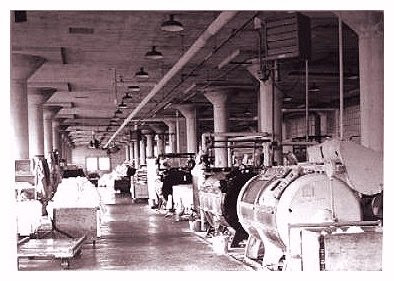
Here is a sentence you will not find in most travel brochures about The Rock: Alcatraz ran one of the largest laundry operations on the West Coast of the United States.
Before it was a federal penitentiary and before that — before it was a military prison — Alcatraz was a fort, and the fort had laundresses. Irish immigrant women, mostly, living in a frame building on the southwestern slope of the island with the salt wind off the bay stiffening everything on the line. They sorted, soaked, scrubbed, boiled, rinsed, wrung, and dried the laundry of at least 25 soldiers each, and they were paid $40 a month at a time when the average soldier earned $16. Better than an officer’s wife, which tells you something about how physically brutal the work was. By 1883, the Army stopped providing rations to laundresses and effectively ended their employment with a single budget line.
When the federal penitentiary opened in 1934, the laundry moved indoors and went industrial. The New Industries Building, constructed in 1939 as part of a $1.1 million modernization, housed a dry cleaning plant alongside a clothing factory, furniture plant, and brush factory. Prisoners earned wages — fractions of a dollar — deposited into a Trust Fund they’d collect on release. Working in the laundry was a privilege, not a default assignment. You had to earn it.
Which meant that the laundry room was also, quietly, a place of ambition.
Huron “Ted” Walters disappeared from the prison laundry building in August 1943. He was caught at the shoreline before he made it to the water. A simpler attempt, a simpler failure.
Then there’s John Giles, whose method had the kind of elegance that makes you want to applaud even as you wince. Giles worked at the loading dock, unloading dirty army laundry sent to the island to be cleaned. Over time — steadily, patiently, across multiple shifts — he stole individual pieces of a U.S. Army uniform. He assembled the whole thing quietly and waited. On July 31, 1945, Giles dressed himself in the stolen uniform and walked calmly onto an Army launch. He escaped Alcatraz. He was discovered missing almost immediately. The launch, unfortunately for Giles, was headed to Angel Island — not San Francisco. He was met on the dock by correctional officers and returned to The Rock without ever touching the mainland.
He had walked out of the most secure prison in America wearing laundry he stole one piece at a time, and he still didn’t make it.
And then there’s the 1962 escape — the one that closed the prison.
Frank Morris and brothers John and Clarence Anglin built their famous life raft and flotation vests from more than 250 rubberized raincoats stolen from the prison laundry, fused together with steam pipes and institutional cement. The raft was folded and hidden atop Cellblock B while the three men — who had first connected during their shifts in the prison laundry — slipped dummy heads onto their pillows and climbed out into the fog.
The laundry gave them the raincoats. The raincoats gave them the raft. Whether the raft gave them freedom is still, technically, an open question. The U.S. Marshals Service still has their files active.
The Darker Thread: Laundry and the Convict Lease System
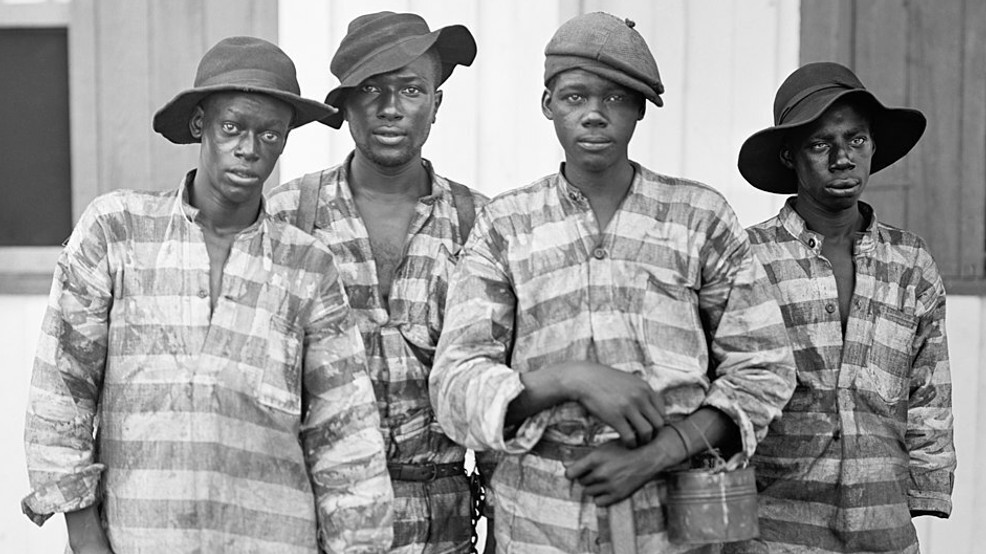
This is where the history stops being interesting in the way that Alcatraz is interesting, and starts being important in the way that things you’d rather not know are important.
The Thirteenth Amendment abolished slavery in 1865 — except as punishment for crime. That exception did not go unnoticed. Within months, Southern states began passing vagrancy laws that criminalized Black men for being out of work, for gathering in public, for failing to carry a work pass. They were convicted, sentenced, and leased.
Convict leasing was exactly what it sounds like: the state rented out its incarcerated population to private companies. The companies paid as little as $9 a month for a person’s entire labor. In 1898, 73 percent of Alabama’s annual state revenue came from convict leasing. The system was enormously profitable for everyone except the people doing the work.
At the Tennessee convict stockades, women prisoners — overwhelmingly Black — were assigned tasks that mapped onto antebellum domestic labor: food preparation, sewing, and washing the stockade’s laundry. This was called, in the language of the era, “women’s work.” It was slavery with a different name and a set of bars. Guards held loaded shotguns with instructions to shoot anyone attempting to escape, and death ledgers show they used them.
The conditions were documented as brutal even by the standards of people who were profiting from them: rough board shanties, contaminated water, tuberculosis, malaria, beatings for falling behind on quotas. Laundry in these contexts wasn’t a privilege or a job. It was simply what the women did between waking and sleeping, until they couldn’t anymore.
Alabama was the last state to outlaw convict leasing — in 1928.
What the Suds Conceal
There’s a throughline in all of this that the steam makes it easy to miss.
Laundry has always been assigned to people without power, and inside prisons and workhouses, that assignment has never been neutral. In Victorian England, the laundry room was where women were confined as punishment and where they worked as daily labor, and there was no meaningful difference between the two. At Alcatraz, laundry was a privilege that structured social hierarchy on an island with almost no other currency. In the convict lease system, it was the unpaid labor of women who had been criminalized for the act of existing while Black in the post-Civil War South.
The machines changed. The dynamics didn’t much.
The laundry room has always known things about power that the rest of the facility tried to keep clean.
The Laundry Club does not believe in sanitizing history. Sometimes you have to let it soak.


Leave a Reply