The Laundry Club | Forgotten History • Public Health • The People Behind the Wash
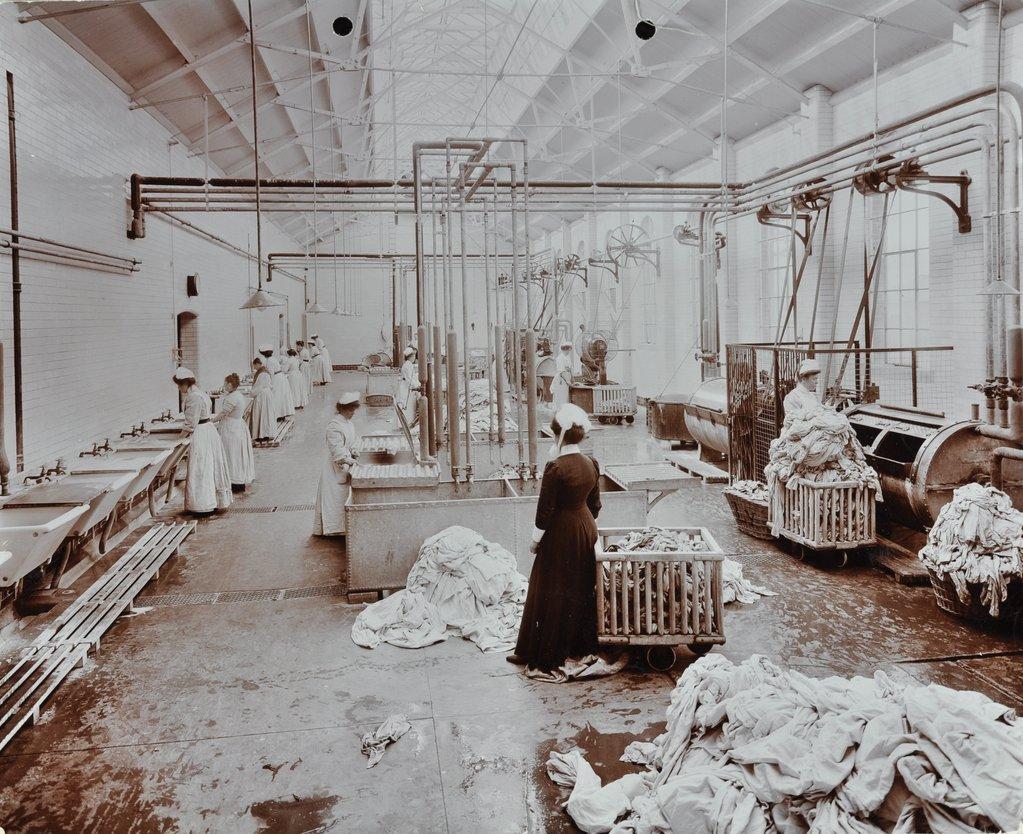
Imagine working in a hospital laundry in 1918.
Every day, piles of sheets, pillowcases, towels, nightgowns, and blankets arrived from wards overflowing with influenza patients. Some were soaked with sweat. Others were stained with bodily fluids. And every piece had to be handled, washed, dried, and returned.
There were no disposable isolation gowns, no modern industrial infection-control systems, and certainly no antibiotics to treat the bacterial pneumonia that often followed influenza.
While doctors and nurses fought to keep patients alive, another group of workers performed a less celebrated but essential job: handling the hospital’s dirty laundry.
And in the middle of one of the deadliest pandemics in modern history, that was no ordinary chore.
When the World Was Dying, Someone Still Had to Do the Laundry
The 1918 influenza pandemic infected approximately 500 million people, roughly one-third of the world’s population. At least 50 million people died worldwide, including an estimated 675,000 Americans.
Unlike many seasonal influenza outbreaks, this pandemic killed unusually large numbers of otherwise healthy young adults.
Hospitals filled beyond capacity. Nurses worked exhausting shifts. Temporary treatment facilities appeared in schools, armories, and other public buildings.
And then there was the laundry.
Historical accounts describe shortages of hospital linens, mattresses, and gowns. In some communities, nurses caring for entire sick families also found themselves cooking, cleaning, and washing clothing. CDC+1
The pandemic wasn’t just a medical emergency. It was a logistical nightmare.
Boil It, Steam It, or Burn It
Public health officials in 1918 understood that influenza was contagious, even though the influenza virus itself had not yet been isolated.
Their instructions could be surprisingly specific.
An October 1, 1918, Washington, D.C., health department notice recommended boiling patients’ bed linens and towels, while exposing blankets and other bedding to daylight and sunshine. It also advised boiling or burning cloths contaminated by respiratory secretions.
Military medical guidance described steam treatment, chemical disinfection, and laundering as methods for handling potentially contaminated bedding and clothing. Images+1
Think about what that meant for a household in 1918.
Washing machines were not yet standard household appliances. Many families still relied on washboards, tubs, heated water, and substantial physical labor.
Now imagine trying to boil contaminated sheets while caring for a spouse with a dangerously high fever, three sick children, and perhaps feeling the first symptoms yourself.
Suddenly, laundry wasn’t just another household chore.
It was part of the struggle to survive.
The Invisible Workers of the Pandemic
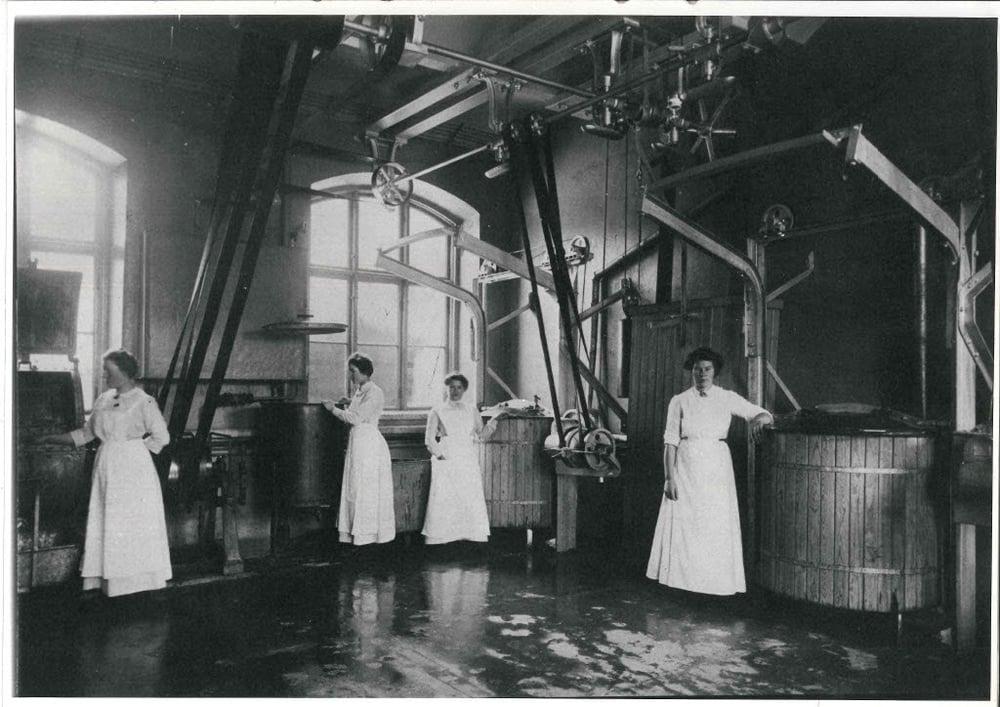
History remembers the physicians, nurses, public health officials, and volunteers who responded to the influenza pandemic.
And rightly so.
But the daily work of keeping hospitals functioning also depended on people whose names rarely appeared in newspaper headlines.
Laundry workers, cleaners, cooks, attendants, and other support personnel helped maintain the basic conditions necessary for patient care.
A hospital could have skilled physicians and dedicated nurses, but without clean bedding and sufficient supplies, caring for hundreds of patients became even more difficult.
The University of Pennsylvania’s historical research on pandemic nursing describes how fresh laundry, water, food, and other necessities became difficult to obtain as patient numbers overwhelmed available resources. Penn Nursing
The surviving historical record doesn’t establish how many laundry workers contracted influenza specifically through their work. Nor does it establish that handling laundry was a major driver of transmission.
Nevertheless, their labor was essential.
And the conditions in which they worked deserve a place in the history of the pandemic.
Was the Laundry Actually Spreading Influenza?
Here’s where the history becomes especially interesting.
People in 1918 were right to take infection prevention seriously. But they didn’t have the scientific understanding of influenza transmission that we have today.
Influenza primarily spreads through respiratory particles released by infected people, particularly when they breathe, speak, cough, or sneeze.
Contaminated objects can sometimes contribute to transmission, but dirty bedding is not considered a primary route of influenza spread.
Modern CDC guidance explains that contaminated healthcare textiles pose negligible transmission risk when properly handled and laundered. Healthcare workers are advised not to shake soiled linens, to contain them appropriately, and to follow established washing procedures. CDC
In other words, the instinct to clean and disinfect was reasonable.
But boiling every blanket or exposing bedding to sunlight wasn’t going to stop a respiratory pandemic by itself.
The more important dangers included crowded wards, close contact with infected patients, and inadequate respiratory protection.
The Women Who Carried the Burden Home
Much of the pandemic’s laundry wasn’t done in hospitals at all.
It happened in homes.
Visiting nurses traveled between households, sometimes finding entire families bedridden. They changed sheets, bathed patients, prepared food, and taught relatives how to care for the sick.
Historical nursing research documents how nurses instructed families to boil soiled linens and practice basic hygiene while caring for influenza patients. PubMed Central (PMC)
In many households, women already carried much of the responsibility for washing, cooking, childcare, and caring for sick relatives.
During the pandemic, those responsibilities could become overwhelming.
And unlike the physicians whose names appeared in official records, the countless women who washed infected bedding in their kitchens and backyards generally left little documentation of their experiences.
Their contribution wasn’t glamorous.
It was exhausting, repetitive, and necessary.
A Century Later, the Laundry Still Matters
When COVID-19 emerged more than a century later, the world again confronted questions about contaminated clothing, hospital linens, protective equipment, and infection control.
The technology had changed dramatically.
Industrial washers, standardized disinfection procedures, disposable medical supplies, and modern protective equipment made healthcare laundry much safer and more efficient.
Yet the basic problem remained familiar.
Healthcare facilities still needed clean bedding. Workers still needed protective clothing. Families still needed to care for sick loved ones.
And someone still had to wash everything.
The difference was that modern science could better distinguish between genuine transmission risks and precautions that offered little additional protection.
The Final Rinse
When we remember the 1918 influenza pandemic, we tend to picture crowded hospital wards, masked nurses, military camps, and rows of beds.
We rarely picture a laundry room.
But perhaps we should.
Because behind every freshly made hospital bed was someone who had to remove the dirty sheets, clean them, and prepare them for the next patient.
Behind every family struggling through influenza was another mountain of laundry waiting to be washed.
History is full of people who performed extraordinary work without ever being recognized for it.
Some carried medical bags.
Some carried stretchers.
And some carried baskets of dirty sheets.
The world was fighting a pandemic. The laundry still had to get done.


Leave a Reply