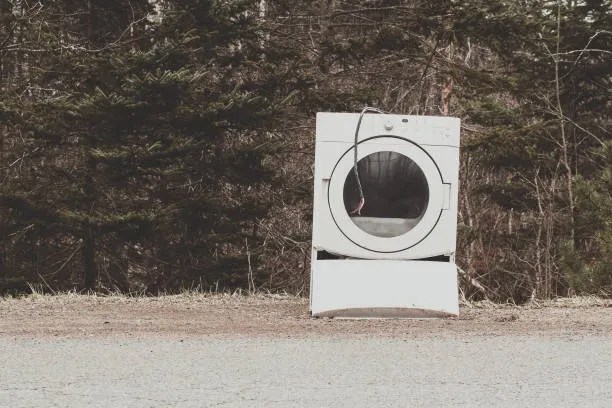
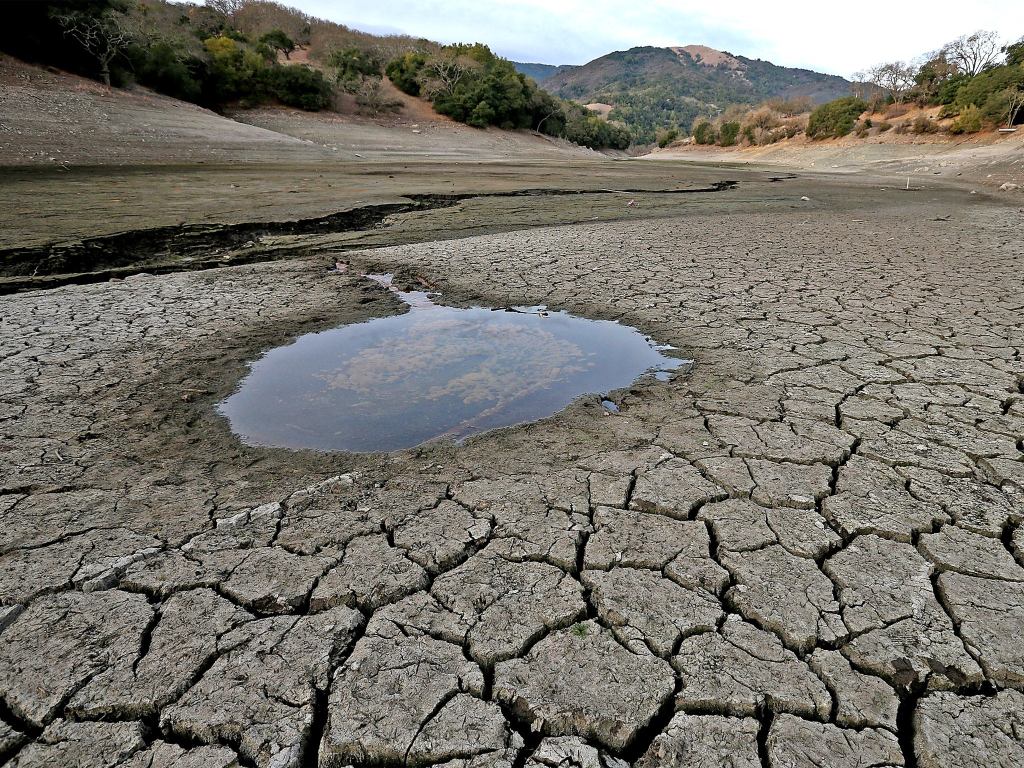
There is something comforting about the sound of a washing machine filling.
The rush through the pipes.
The click of the valve.
The first heavy slosh beneath the clothes.
It is one of those ordinary household sounds we barely notice because we assume it will always be there. Water comes in. Dirty goes out. The machine does its little mechanical exorcism, and forty-two minutes later, yesterday has been rinsed down the drain.
Unless, of course, your washing machine is a liar.
You know the kind. It says eighteen minutes remaining for thirty-seven straight minutes while it stares into the middle distance and quietly rethinks its life choices.
That is where the world’s water supply feels like it is sitting right now.
Eighteen minutes remaining.
No one knows how long that actually means.
The pipes are making a noise.
And we have already tried turning the planet off and back on again.
Again, With America’s Shit
Let’s start around 1900, when America was building cities, railroads, factories, sewers and one hell of an ego.
We were also dumping human waste and industrial waste into many of the same rivers people drank from downstream.
If the current carried it away, it became somebody else’s problem.
Very upstream thinking.
Typhoid fever was infecting roughly 100 out of every 100,000 Americans in 1900. Cholera and typhoid traveled beautifully through water contaminated with human waste. Cities learned this the hard way, which is humanity’s favorite learning style.
Then came filtration and chlorination.
Jersey City began using chlorine as a primary drinking-water disinfectant in 1908. Waterborne disease rates dropped. Thousands of lives were saved. It was brilliant, necessary and one of the greatest public-health victories of the twentieth century.
It also seems to have taught us a dangerous lesson.
The lesson should have been: protect the water.
The lesson we took was: put whatever the hell you want in it and build a machine to take it back out.
In Grafton, West Virginia, polluted drinking water caused a typhoid epidemic during the winter of 1926 and 1927. More than 150 people became sick. Twenty-five died. The town pulled its drinking water from the Tygart Valley River, and officials had been urging filtration for years.
The water had already sent a warning.
We were waiting for it to send a body count.
By the middle of the century, we had expanded the dirty-load collection considerably. Oil. Solvents. Mining waste. Heavy metals. Fertilizer. Pesticides. Industrial sludge. Chemical runoff. Everything nobody wanted near their own kitchen table went into the land, the rivers or a hole in the ground with the sincere belief that holes never leak.
Then came PFAS, the so-called forever chemicals.
They were used to make things resist water, oil, heat and stains.
We invented chemicals that water could not wash away.
Then we washed them into the water.
Honestly, that is almost performance art.
The first major federal law aimed at water pollution arrived in 1948. The rivers remained unimpressed.
The Cuyahoga River in Ohio caught fire at least a dozen times. The famous fire happened in 1969 when oil-soaked debris on the river ignited.
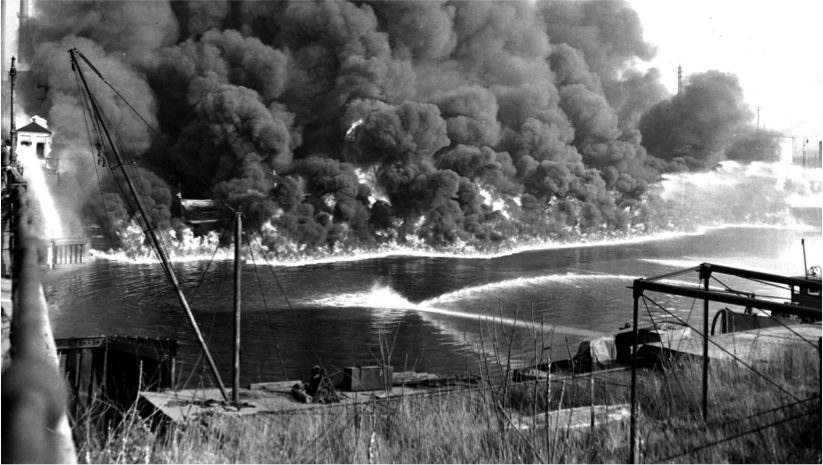
A river should not require a fire department.
That feels like a reasonable standard.
The outrage surrounding the Cuyahoga helped push the country toward the Clean Water Act of 1972. And the law worked. Wastewater treatment expanded. Industrial discharges were regulated. Rivers improved. Fish returned to places where even bacteria had probably been considering relocation.
That matters.
The Laundry Club does not believe every stain is permanent.
But clean water does not stay clean because we passed a law fifty years ago and congratulated ourselves.
While we cleaned up the pollution that floated, foamed, stank and occasionally burst into flames, we got very good at creating pollution that disappeared.
It went under the soil.
Into the rain.
Down the well.
And out of sight, which is America’s most heavily funded environmental program.
We Drank the Savings Account
Aquifers are not underground lakes with convenient little refill spouts.
They are layers of rock, sand and sediment holding water in pores and fractures. Some recharge quickly. Others hold water that took centuries or longer to collect.
An aquifer is the planet’s savings account.
We found the PIN.
Beginning around the 1940s, powerful pumps helped transform the High Plains into one of the most productive agricultural regions in the country. The High Plains aquifer, including the Ogallala, watered crops, fed people, built towns and supported generations of farmers.
It also came out faster than nature could put it back.
In some areas, groundwater levels have dropped more than 100 feet. In others, more than half of the aquifer’s saturated thickness is gone.
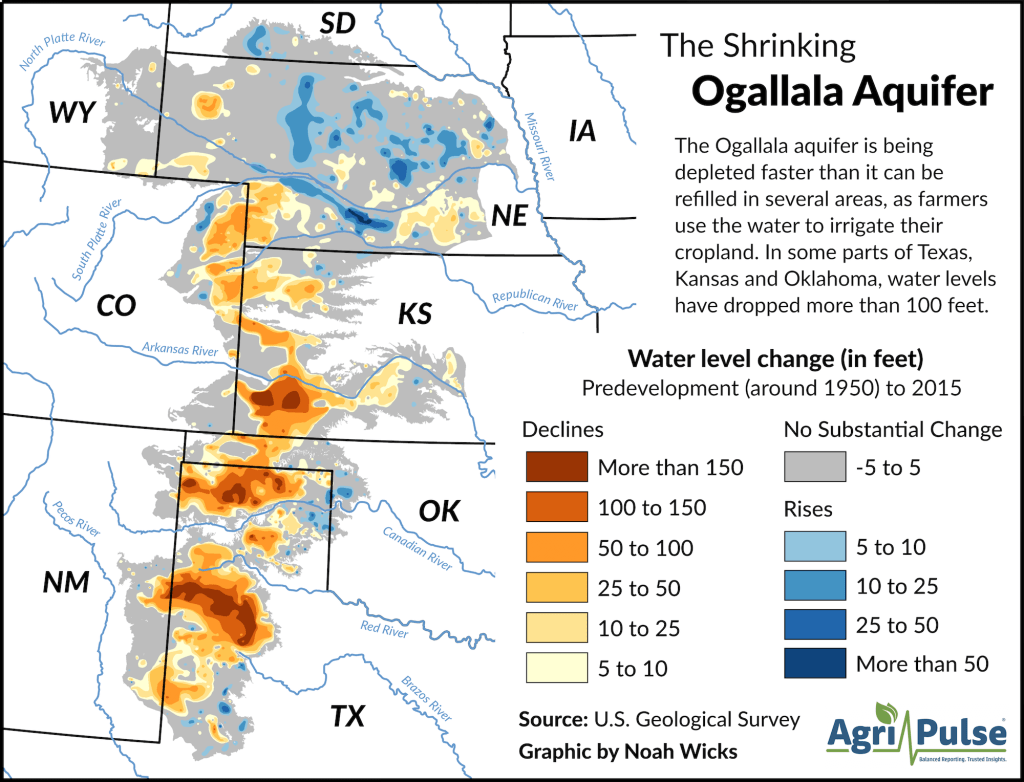
And gone is a tricky word when we are talking about groundwater.
Some of it may return.
Eventually.
Long after the farm is dry, the town is gone and someone has turned the abandoned grain elevator into a luxury Airbnb called The Rustic Dust Experience.
Groundwater and rivers are connected. Pump enough from below and springs weaken. Streams lose the slow underground flow that keeps them alive between rains. Land can sink. Saltwater can creep into coastal wells.
We did not just pump water from beneath the ground.
We pumped tomorrow’s river.
Agriculture is still the country’s largest consumptive use of water. Crop irrigation accounts for about 90 percent of consumptive use across the Lower 48.
Before anyone throws a tomato at a farmer, people have to eat.
The farmer is not the villain.
The villain is the system that planted thirsty crops in dry places, promised water that did not exist, priced depletion like abundance and then mailed Linda a flyer telling her to turn off the faucet while brushing her teeth.
Linda can brush dry until her gums file a complaint.
She cannot personally refill the Ogallala.
The Cloud Has a Drinking Problem
Here is the part that feels like it was written by a screenwriter who got fired for being too obvious.
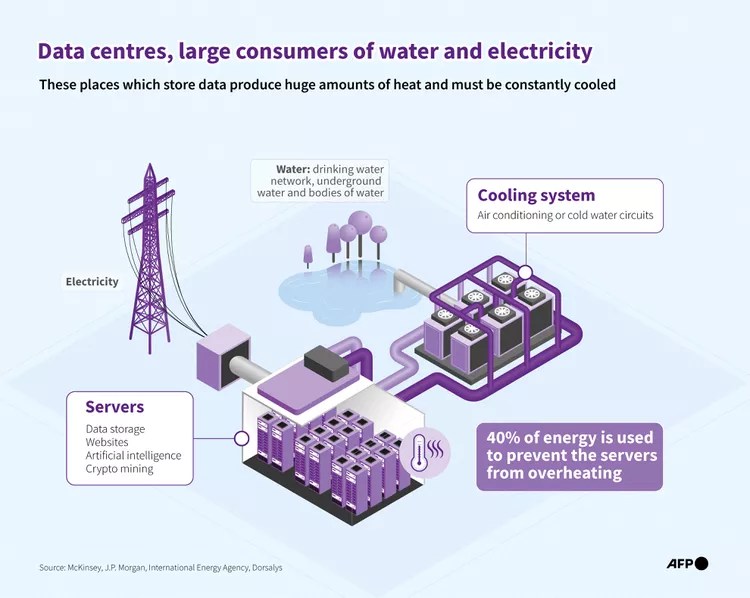
While more than half of the Lower 48 sits in drought, we are building enormous warehouses full of machines that need water to keep thinking.
The cloud was never a cloud.
It is a concrete building full of servers.
And it is thirsty as hell.
In 2023, American data centers directly consumed about 17.4 billion gallons of water, mostly for cooling. By 2028, that number is projected to reach somewhere between 38 and 73 billion gallons.
That does not include all the water consumed to generate their electricity. Add that, and the 2023 estimate climbs by roughly another 211 billion gallons.
Are data centers using more water than American agriculture?
No.
Do some use recycled water, air cooling or more efficient systems?
Yes.
Are we still dropping fast-growing industrial thirst into water-stressed communities while asking regular people to skip showers?
Also yes.
Artificial intelligence can write a sonnet about rain in four seconds.
The server still needs real water.
Somewhere, a machine is composing a thoughtful paragraph about conservation while drinking from the same watershed as a family whose well is dropping.
If that is not darkly funny, I do not know what is.
Clear Does Not Mean Clean
About 43 million Americans rely on private wells.
Those wells are not covered by the federal Safe Drinking Water Act. Owners are responsible for testing them, which is a wonderful system if every household has extra money, free time and a minor degree in hydrochemistry.
A national study of more than 2,000 private wells found that roughly one in five contained at least one contaminant above a human-health benchmark.
Nitrates can come from fertilizer, animal waste, sewage and septic systems. Heavy metals can come from mining, manufacturing, refineries, waste sites, plumbing or the earth itself. Floodwater can carry bacteria, fuel, pesticides and chemicals straight into a well that was safe the week before.
Then there are the forever chemicals.
The U.S. Geological Survey estimates that at least one kind of PFAS could be detected in about 45 percent of American tap water. Researchers tested for only a fraction of the thousands of PFAS compounds believed to exist.
That does not mean every faucet is dispensing a glass of poison.
It means the innocence is gone.
Clear does not mean clean.
Cold does not mean safe.
And legal has never meant untouched.
Millions of homes are still connected to water mains by lead service lines. The Environmental Protection Agency currently estimates there are about four million of them.
We know there is no safe level of lead exposure.
We also know the pipes are there.
The water still travels through them every day because apparently “maybe do not deliver drinking water through lead” was too ambitious for a single century.
Even rain is carrying our dirty laundry.
A two-year project collecting rain and snow around Minnesota and Michigan found PFAS in every sample. U.S. Geological Survey researchers found plastic particles falling with precipitation in remote parts of the Rocky Mountains.
It is raining plastic.
It is snowing forever chemicals.
Congratulations. We gave the weather a synthetic blend.
That does not mean every raindrop is lethal. It means there is no clean edge of the map where pollution politely stops.
It rises.
It drifts.
It falls on somebody else’s roof.
Too Much Water, None to Drink
Here is the cruelest part.
The opposite of drought is not always relief.
Sometimes it is a flood.
Rain is supposed to soak into soil, refill wetlands, recharge aquifers and move slowly toward rivers. But we paved the soil, drained wetlands, straightened streams and built parking lots large enough to be visible from space.
When rain hits roofs, highways, concrete and ground baked hard by drought, it runs.
Fast.
Intense flooding can raise the water in a river while reducing the amount that actually sinks into the ground.
Imagine standing chest-deep in water while the aquifer beneath you remains empty.
That is some Old Testament-level bullshit.
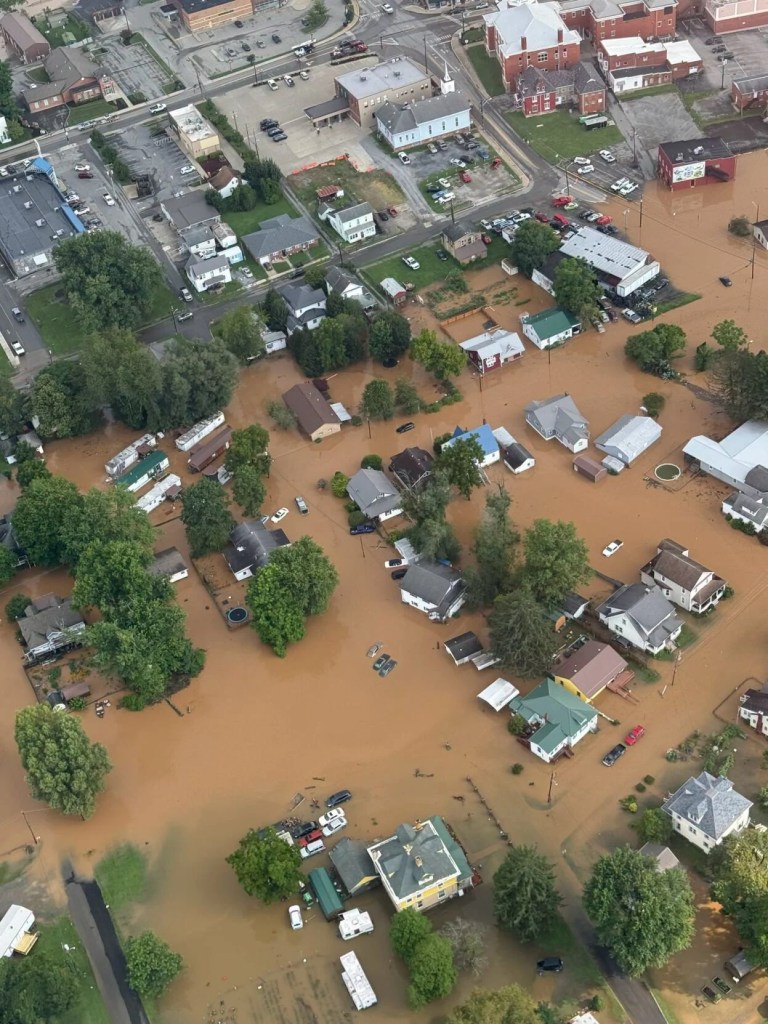
I recently deployed with the American Red Cross for flood recovery in West Virginia. I watched communities deal with the ugly contradiction of water everywhere and safe water nowhere.
During the July flooding, parts of Lewis, Upshur and Randolph counties received four to nearly eight inches of rain. Homes and businesses flooded. Roads failed. People died. Residents were told to use bottled water, follow boil-water notices and have private wells tested.
People had water in their living rooms.
They still needed someone to bring them water.
And while West Virginia was trying to shovel out one load of mud, Tibet and Nepal were being hit by another.
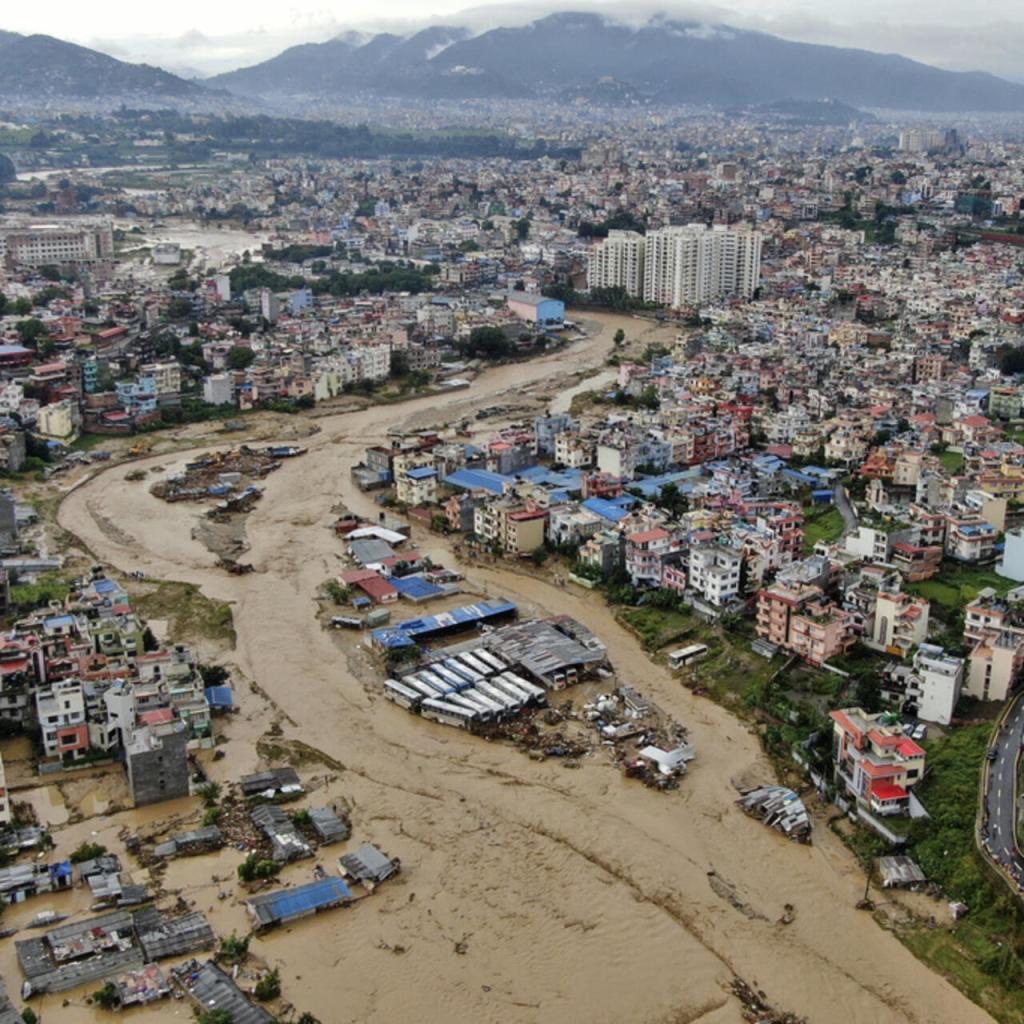
As I write this, a catastrophic collapse of rock and ice near the Nepal–Tibet border has sent water, mud and debris ripping through Himalayan valleys. Villages, roads, bridges and hydropower facilities were destroyed. River channels changed for more than sixty miles. Hundreds are dead, and many more remain missing.
It was not just rain.
It was frozen water leaving the mountain all at once.
The warming of high mountains is destabilizing glaciers and slopes. Scientists are careful, as they should be, about blaming one single disaster on one single cause.
The mountain does not care about our wording.
Ice that stored water for generations is disappearing.
Sometimes it melts quietly.
Sometimes it comes down the valley like the spin cycle has come loose from the machine.
The Water Crisis Is Already Here
We keep talking about water scarcity in the future tense.
By 2050.
By the end of the century.
Someday.
The word someday is doing a lot of unpaid labor.
Puerto Rico is surrounded by water and still knows what it means to wait for it.
Right now, agricultural water rationing is in effect across southern districts. Farmers in the southwest are receiving irrigation water three days a week. In the Patillas district, streams have been contributing only about a quarter of their normal flow. Pastures are drying. Soil is cracking. Young trees are dying before they ever become old trees.
This is not the entire island running dry.
It is the washer making that noise again.
Puerto Rico heard it during the drought of 2014 through 2016, when restrictions affected more than a million people. Rationing returned in 2020.
Now the warning light is blinking again.
In Cuba, people are already living by the pump schedule.
This year, residents of Havana have stood in lines with buckets and plastic jugs waiting for tanker trucks. Fuel and power shortages have disrupted the electricity needed to pump and distribute water. Old pipes leak. Pumps fail. The faucet becomes a decorative suggestion.
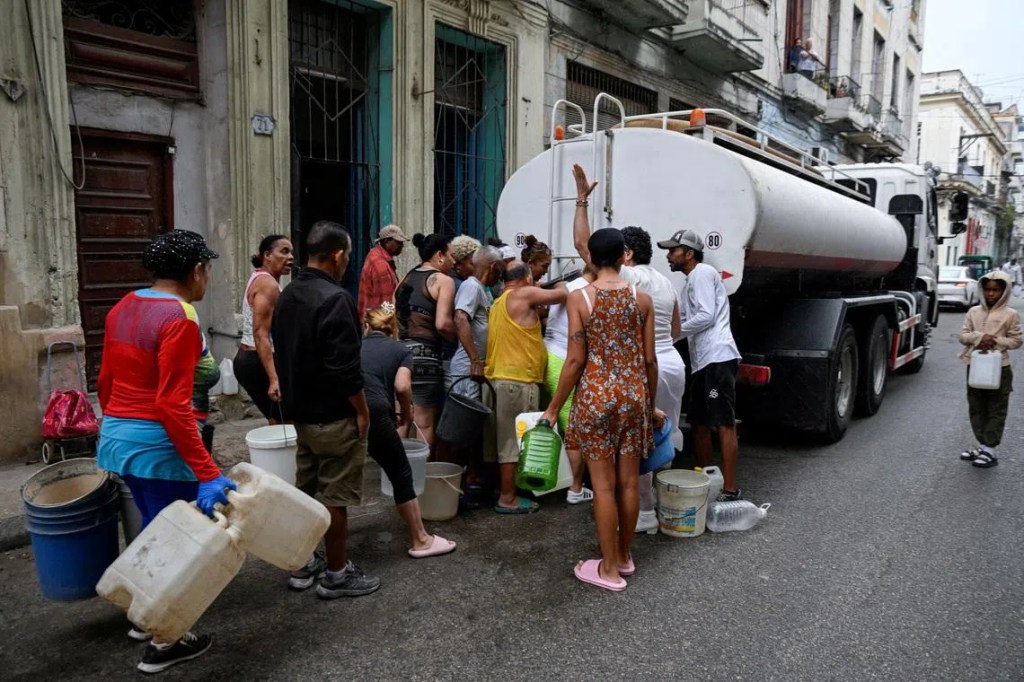
There can be water in the ground, water in the reservoir and water at the treatment plant.
If the electricity is off, the pump is dead and the pipe is broken, none of that water is in your cup.
Europe spent a long time treating water scarcity as something that happened somewhere hotter, poorer and conveniently farther away.
That illusion is drying up.
This summer, drought conditions spread across roughly half of the European Union and the United Kingdom. The Loire, Po, Rhine and Danube dropped to record-low levels in August. France imposed water restrictions across dozens of departments. Low water stranded ferries and grain barges on the Danube. Even Switzerland—the so-called water tower of Europe—reported below-average groundwater at about half of its federal monitoring sites.
When rivers shrink, the damage does not stay beside the river.
Power plants struggle to cool.
Barges stop moving.
Crops stop growing.
Food and electricity get more expensive.
Eventually, someone starts deciding which industries, farms, towns and households get the remaining water.
That is when scarcity takes off its lab coat and starts knocking on doors.
Desalination Is Not a Magic Faucet
The Middle East does have desalination plants.
Hundreds of them.
More than half of the world’s desalination capacity is concentrated across the Middle East and North Africa. Some Gulf nations depend on desalinated seawater for most of their drinking supply.
That sounds like we solved it.
We did not.
Desalination is a machine. It needs electricity, chemicals, membranes, trained workers, pipelines, spare parts and money. It produces concentrated brine. It has to keep running every single day.
And machines stop.
This year, damage to a desalination facility in Iran’s Hormozgan Province cut drinking water to twenty villages. An attack damaged a major power and desalination complex in Kuwait, where desalinated water supplies most drinking needs.
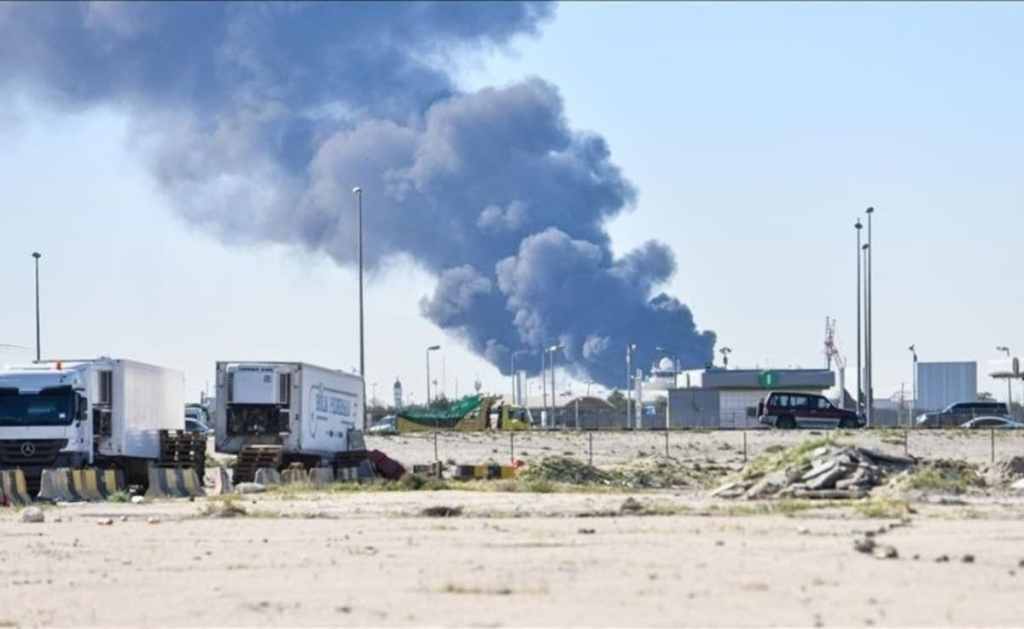
In Gaza, desalination exists. That almost makes the situation worse.
The sea is right there.
The plants are right there.
The water still does not reach everyone.
Damage, fuel shortages and the lack of electricity, chemicals and spare parts have crippled production. UNICEF reported that seawater desalination output fell from about 20,000 cubic meters a day in March to 16,000 by May.
One critical filling point helped provide drinking water to 285,000 people.
Trucking from that point stopped after two contracted drivers were killed.
There is something especially cruel about being thirsty beside an ocean.
Jordan has only about 84 cubic meters of renewable water available per person each year, far below the level considered absolute scarcity. Yemen’s groundwater has been pushed toward crisis by overuse and war.
Across the region, people with money can sometimes buy another tank, another truck, another delivery.
Everyone else waits with containers.
The water crisis is never only about water.
It is about who gets the last clean gallon.
Eighteen Minutes Remaining
As of this week, 56.61 percent of the Lower 48 is in drought.
Nearly 100 million people are affected.
Almost 95 percent of the Intermountain West is in drought. Lake Powell is around 22 percent full. Lake Mead has reached record lows. One reservoir in New Mexico has fallen to roughly one percent of capacity.
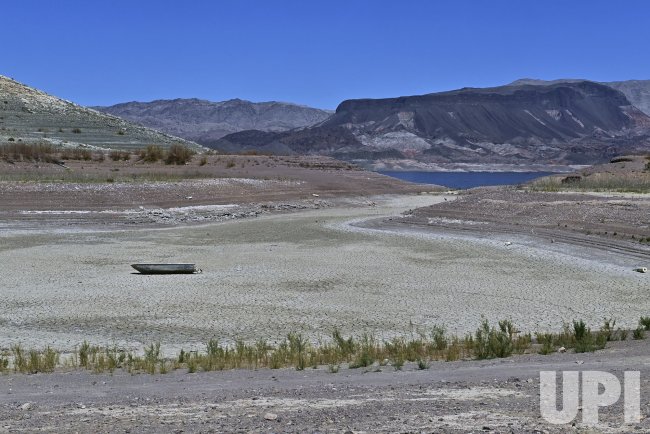
The Colorado River system supplies more than 40 million people, thirty Tribal Nations, two Mexican states and about 5.5 million acres of farmland.
We built cities in the desert around an agreement with snow.
The snow did not sign it.
Meanwhile, El Niño is strengthening in the Pacific. NOAA says there is more than a 90 percent chance it will become very strong through fall and winter, with a real possibility of reaching a strength not seen in the modern record.
El Niño does not cause every flood, drought, wildfire or collapsing glacier.
It rearranges rain.
Some places get too much.
Some get none.
And we have built a water system with no room left for surprises.
Eighteen minutes remaining.
Still.
The Last Load
At 6:12 in the morning, a woman stands beside her washing machine with one hand on the lid.
The water authority said the neighborhood might have pressure for twenty minutes.
Might.
She has already filled the drinking jugs.
She has already made the coffee.
She has already decided what deserves to be clean.
Underwear.
Socks.
Her daughter’s school shirts.
Two dish towels.
Not the sheets.
Sheets are water-rich-people laundry now.
She presses Start.
The machine clicks.
Nothing happens.
Then the water comes through the pipe in a weak, shuddering stream.
The drum begins to fill.
For eleven minutes, the house sounds normal.
That is why she chose the school shirts. Not because they were the dirtiest things in the hamper. Because a clean shirt can still tell a child the world is functioning.
Then the rinse cycle begins.
The machine clicks.
It waits.
The pipes knock once inside the wall.
Then nothing.
Her daughter asks whether the water will come back tomorrow.
The woman says she does not know.
This is not entirely true.
The reservoir notice said critically low. The neighborhood message said the tanker was delayed. The emergency station said every household should conserve drinking water.
She knows.
She just does not want her daughter to know before school.
There are two gallons beside the sink.
She could pour them into the machine.
A high-efficiency washer may use around fourteen gallons for one load. One load is roughly two weeks of one person’s minimum emergency drinking water.
There are five people in the house.
The socks stay soapy.
This is how the last load ends.
Not clean.
Not dirty.
Suspended.
The final water from the pipe sits inside a stainless-steel drum with half-rinsed clothes. The washing machine keeps waiting for a utility that no longer exists.
Outside, an empty tanker turns the corner.
On the roof, rain begins to fall.
No one runs for a bucket.
They were told not to drink it.
Put Water Before the Flashlight
If your tap still works, prepare before it starts coughing air.
Emergency guidance recommends storing at least one gallon of water per person per day for a minimum of three days. Two weeks is better when space allows.
I love a good flashlight.
You cannot drink it.
Test a private well. Find out whether your house has a lead service line. After a flood, assume a well may be contaminated until it has been tested. Remember that boiling can kill many germs, but it cannot boil lead, fuel, pesticides or forever chemicals out of existence.
And keep asking the questions that do not fit neatly inside a plastic emergency tote.
Who is pumping the aquifer?
Who is dumping into the river?
Who approved a thirsty facility in a dry county?
Who gets the tanker first?
Who gets told to conserve while somebody else gets permission to consume?
Personal conservation matters.
But conservation without accountability is just the public being asked to fold the consequences.
Final Spin
Maybe the world does not end with a bang.
Maybe it ends one ordinary sound at a time.
The faucet coughing.
The pump losing pressure.
The washer clicking into a rinse cycle that never comes.
Puerto Rico is rationing irrigation now. Cubans are carrying buckets now. Europe’s great rivers are shrinking now. Families in Gaza are waiting beside a sea they cannot drink now. West Virginians have watched floodwater enter their homes while safe water disappeared from their taps now. Tibet and Nepal are digging through what too much water left behind now.
The water crisis is not coming.
It is already in the pipes.
We spent more than a century poisoning the water, pumping its underground savings and building new machines to ask for more.
Now the machine says eighteen minutes remaining.
It has said that for a while.
Not everything comes out in the wash.
Some stains set.
And at the end of the world, we are all going to be wearing dirty socks.


Leave a Reply