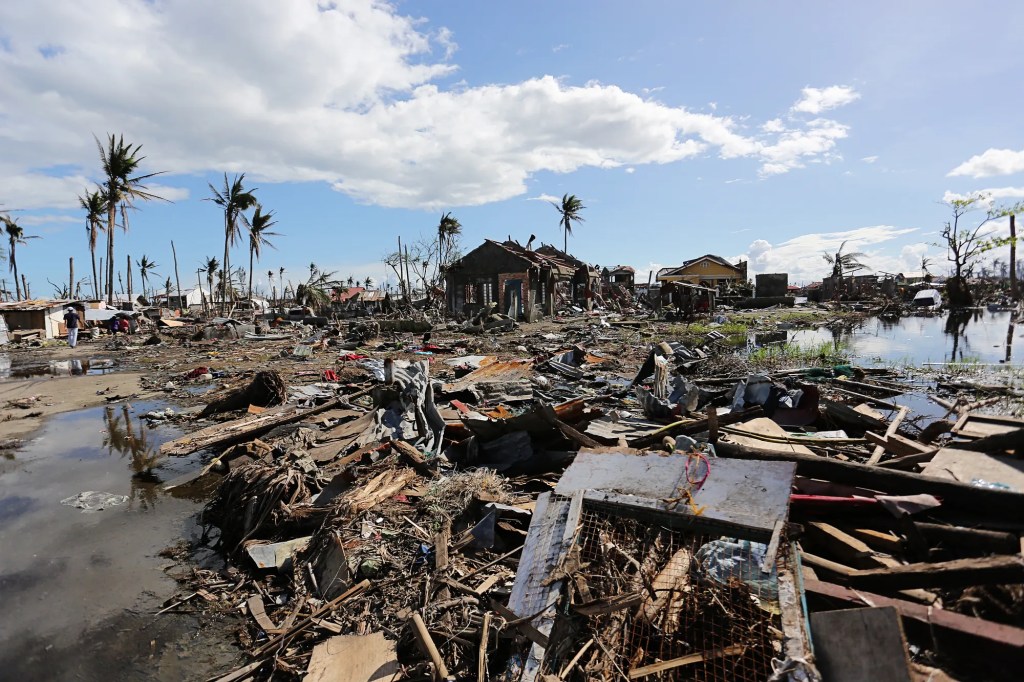
When people picture disaster response, they usually picture the big things first…
Search and rescue.
Ambulances.
Helicopters.
Sandbags.
Generators.
Water.
Food.
Shelter.
The dramatic, immediate, life-or-death needs that take over the first headlines and the first hours. And to be fair, those things matter deeply. They are the difference between survival and catastrophe. But there is another layer of disaster that creeps in just behind those first urgent needs, and it is far more intimate than most preparedness plans ever admit.
Eventually, someone runs out of clean underwear.
That may sound small compared to an earthquake, a tornado, a hurricane, a wildfire, or a flood. But ask anyone who has lived through displacement, sheltering, infrastructure collapse, or prolonged utility loss, and they will tell you the same thing: dignity has logistics. Hygiene has logistics. Recovery has logistics. And laundry is sitting right in the middle of all three.
Disasters do not just destroy buildings. They interrupt the ordinary systems that allow people to remain clean, dry, healthy, and comfortable. Water systems fail. Power grids go down. Roads become impassable. Laundromats flood. Washing machines sit dead and useless in homes without electricity. Shelters crowd people together in close quarters where handwashing, clean clothing, clean bedding, and routine sanitation become public-health issues, not luxuries. In the United States alone, NOAA reports 403 weather and climate disasters causing at least $1 billion in damage from 1980 through 2024, with the five-year average from 2020 to 2024 jumping to 23 such events per year. In 2024 alone, the U.S. experienced 27 billion-dollar disasters. That means this problem is not rare, and it is not theoretical. It is part of modern disaster life.
What gets overlooked is that laundry stops being a housekeeping issue very quickly in a disaster zone. It becomes a health issue. The CDC warns that floodwater can carry sewage, chemicals, and dangerous contaminants, and specifically advises that clothes contaminated by flood or sewage water should be washed in hot water and detergent before being reused. The agency also warns people to stay out of floodwater when possible and to wash skin with soap and clean water as soon as they can after contact. In shelters and evacuation centers, CDC guidance stresses frequent handwashing, access to sanitizer, and clean living environments because crowding can accelerate the spread of disease. In other words, clean clothes and clean linens are not about vanity after a disaster. They are part of infection control.
That reality shows up again and again across disasters of every type. After hurricanes and floods, families often return to homes where the washer is damaged, the dryer is useless, or the water coming from the tap is not yet safe. After earthquakes, people may be living outside, in cars, in tents, or in damaged structures while they wait for inspections and utility restoration. In conflict zones and mass displacement settings, the issue becomes even sharper. UNHCR frames water, sanitation, and hygiene services as life-saving, and UNICEF’s emergency hygiene-kit responses routinely include detergent soap, towels, and related hygiene supplies because families forced from their homes still need to wash themselves, their children, and their clothing. In Yemen, for example, UNICEF reported nearly 15.3 million people needing access to clean water and sanitation systems, while rapid response kits distributed to displaced households included detergent soap, soap bars, towels, nail clippers, and baby basins.
That tells us something important. Professional responders and humanitarian organizations already understand what many everyday preparedness conversations still miss: people do not stop needing hygiene because a disaster happened. If anything, the need becomes more urgent. The Sphere Handbook, one of the best-known humanitarian standards frameworks in the world, explicitly treats hygiene items and the ability to maintain hygiene as part of dignity, health, and well-being. Older Sphere language is even more direct, noting that washing clothes is an essential activity for hygiene. That matters because it reframes laundry from “chore” to “survival system.”
So what has been done?
Quite a bit, actually, though not always visibly. FEMA and Ready.gov preparedness guidance already build in pieces of the answer by telling households to keep a complete change of clothing in emergency kits and to include sanitation and hygiene items. FEMA’s sheltering guidance and assistance policy also reference hygiene kits, clothing, and other support items used in disaster sheltering and immediate recovery. Internationally, relief agencies distribute hygiene kits that often include laundry soap, body soap, towels, menstrual supplies, toothbrushes, buckets, and water containers. In several IFRC and UNHCR emergency operations, laundry soap or detergent appears not as an afterthought, but as a standard relief item. That is a quiet but important admission from the field: people cannot remain healthy or dignified for long if every garment they own becomes dirty, wet, contaminated, or impossible to wash.
Still, there is a gap between what official guidance allows for and what many households actually prepare for. Most families store canned food, flashlights, batteries, and bottled water if they prepare at all. Far fewer think through the laundry chain.
Do we have enough underwear for everyone for several days? Extra socks?
A way to hand-wash if the power is out? A bucket with a lid? Travel detergent?
Gloves?
Clothespins?
A compact clothesline?
Trash bags for separating contaminated clothing from clean clothing?
A backup plan if the local laundromat is closed for weeks?
These are not glamorous questions, but they are exactly the sort of questions that become painfully real on day three, day five, and day ten.
That is where emergency preparedness can become smarter and more humane. Households should think about laundry in three phases.
The first phase is immediate survival. In the first 72 hours, the goal is not perfect cleanliness. It is staying dry, reducing contamination, and preserving a rotation of essentials. That means extra underwear, socks, season-appropriate clothing, and bags to separate wet or dirty items from clean ones. Ready.gov already recommends a complete change of clothing and sturdy shoes in an emergency kit. That guidance is more practical than it first appears. A fresh set of clothes can prevent rashes, reduce cold stress, protect dignity, and help someone function better psychologically in chaos.
The second phase is short-term displacement. This is when a family is in a shelter, hotel, relative’s home, or damaged home without reliable utilities. At this point, hygiene kits matter. Hand-washing stations matter. Access to detergent matters. CDC shelter guidance emphasizes frequent handwashing and clean environments, and humanitarian practice shows that supplying soap, towels, and detergent early reduces the health burden later. In plain terms, it is much easier to prevent a hygiene crisis than to manage one once people are already living shoulder-to-shoulder in dirty clothes and shared spaces.
The third phase is recovery. This is when communities need more than bottled water and cots. They need systems restored. Water. Wastewater. Electricity. Waste removal. Access to washers and dryers. For hospitals, shelters, and care facilities, continuity of laundry service is not optional. Disaster-recovery literature notes that laundry and linen services are part of the operational backbone that has to come back online. That may not make dramatic television, but anyone who has worked in emergency management knows the truth: recovery lives or dies on the boring stuff.
So what can you do?
You can prepare like laundry is part of emergency planning, because it is. Build a small hygiene-and-laundry module into your go-bags or family supply kit. Keep several days of underwear and socks per person packed and easy to grab. Add travel detergent, a small line, clips, gloves, a collapsible bucket if you have room, and sealable bags for dirty or contaminated clothing. If flood risk is part of your life, assume that anything touching floodwater may need to be isolated and properly washed before reuse. If you live in tornado, hurricane, or earthquake country, think beyond evacuation and think about what you will wear on day four when the adrenaline has worn off and normal life still has not returned.
And if you are in emergency management, nonprofit work, mutual aid, ministry, or community response, there is a bigger lesson here too. Hygiene kits should be treated as serious infrastructure support, not charity extras. Shelter planning should include detergent, wash access, drying options, menstrual products, and extra clothing. Community organizations can pre-identify laundromats, mobile laundry partners, shower-and-laundry trailers, or donation pipelines for socks, underwear, towels, and detergent. The public usually notices laundry only when it disappears. Good preparedness means noticing it before that happens.
Because disaster strips life down to its essentials very quickly. Food. Water. Shelter. Medicine. Safety. But after the sirens, after the headlines, after the first night on a cot or in the dark house with no power, people still have bodies. Children still spill things. Elderly people still need clean linens. Women still need menstrual supplies. Workers still need clean socks. Families still need some way to feel human while the rest of life is coming apart.
Laundry may not be the first emergency.
But it becomes one faster than people think.
This isn’t the first time The Laundry Club has followed laundry into places most people would rather not look. If you want to continue down this path, you can revisit my earlier pieces on crisis laundry management, the forgotten clothing inside Fukushima’s exclusion zone, and the reality of Gazans washing clothes in seawater when infrastructure collapses. You can begin with my deeper look at how laundry becomes part of survival itself in Crisis Laundry Management
Final Spin
Disaster preparedness is often taught in dramatic terms, but real resilience lives in the ordinary details. Sometimes that means batteries and bottled water. Sometimes it means realizing that a clean shirt, dry socks, and a way to wash what you have left can make the difference between coping and unraveling.
Support The Laundry Club Blog – because Incident Command might handle operations, but I’m clearly assigned to the Clean Socks Division. ❤

 The Laundry Club Blog
Leave a comment