There is a reason so many cults wear white.
There is a reason brides walk down the aisle in it.
There is a reason the “saved,” the “reborn,” the “enlightened,” the “chosen” — across religions and centuries — so often end up in the same color.
White.
Not red.
Not blue.
Not green.
White.
And when you start tracing that thread through history, theology, psychology, and power structures, it becomes impossible to unsee what’s happening.
White is not just a symbol of purity.
White is a uniform of surrender.
White as Transformation
In Christianity, baptism often involves white garments — especially in early traditions where newly baptized believers were clothed in white robes to symbolize being washed clean of sin. The Book of Revelation describes the saved as wearing white robes. White becomes the visual shorthand for salvation, spiritual cleansing, moral reset.
You were stained.
Now you are clean.
The garment becomes proof.
White robes appear again and again in religious imagery — angels, saints, resurrected bodies, heavenly choirs. Not because heaven has a strict dress code.
Because white communicates something instantly.
No stain.
No history.
No visible contamination.
A blankness.
And blankness is powerful.
Because blankness is controllable.
The Bride in White (Spoiler: It Wasn’t Always That Way)
Here’s the part most people don’t know:
Brides didn’t always wear white.
For centuries, brides simply wore their best dress — whatever color it was. Blue was common. Red was common. Patterns were common.
The white wedding dress didn’t become popular until Queen Victoria wore one in 1840 when she married Prince Albert.
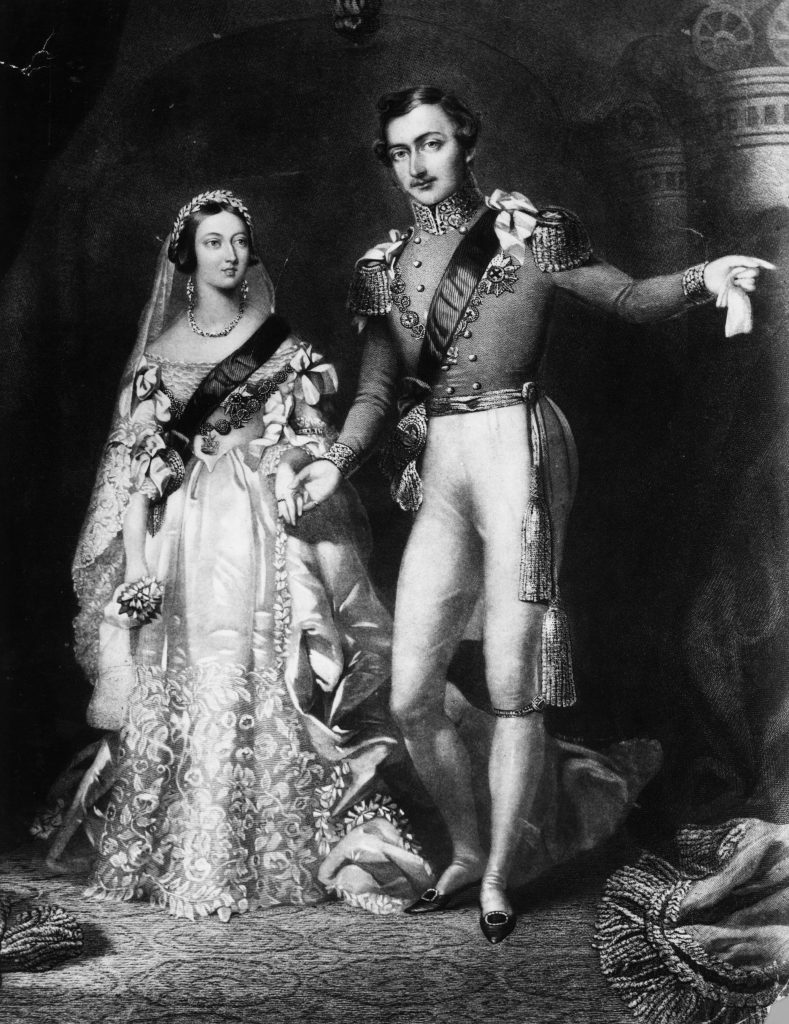
Her choice wasn’t originally about purity. It was about displaying lace craftsmanship.
But Victorian culture — deeply invested in sexual morality and female virtue — reinterpreted it.
White became innocence.
White became virginity.
White became moral worth.
And once that idea embedded itself in Western culture, it hardened.
Now imagine the pressure of that.
A woman walking down the aisle wrapped head to toe in a visual metaphor for untouched purity.
And we call it romantic.
White in marriage became less about fabric and more about signaling:
I am unspoiled.
I am worthy.
I am clean.
That symbolism stuck so hard that even today, women who don’t fit that narrative still wear white — because the ritual demands it.
White is expectation dressed as tradition.
Cults and the Erasure of Identity
Now let’s talk about actual cults.
It’s almost comical how often white appears in high-control religious groups.
The Branch Davidians often wore light or white clothing.
Heaven’s Gate members wore uniform outfits (not white at the end, but uniformity was key).
Rajneesh followers wore red — but many spiritual communes favor white robes.
The Children of God. Certain ashram communities. Purity-based sects. Apocalyptic groups.
White robes. White dresses. White tunics.
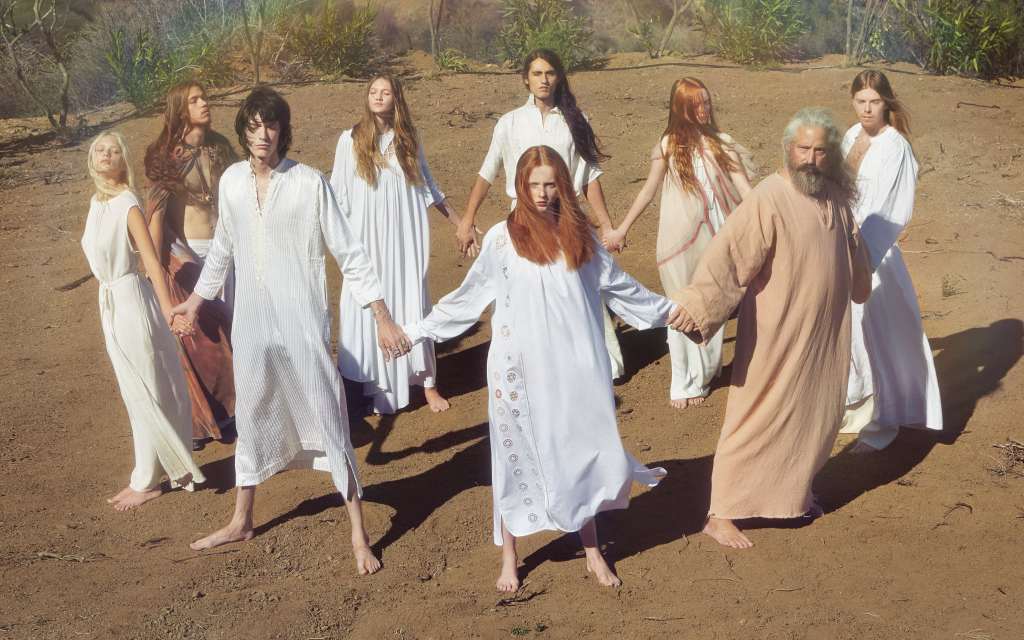
Why?
Because white erases individuality.
It removes hierarchy markers.
It flattens personal style.
It creates visual unity.
When everyone wears white, you no longer see difference — you see belonging.
White is submission disguised as transcendence.
And psychologically, that’s potent.
Studies on uniformity and group identity show that clothing cohesion strengthens group loyalty and reduces personal distinction. When identity fuses with collective symbolism, dissent feels like contamination.
White becomes a wall.
You don’t want to stain it.
And you definitely don’t want to be the one who stains it.
The Psychology of Stain and Shame
White does something no other color does:
It reveals.
Every drop of wine.
Every smudge of dirt.
Every bead of sweat.
White makes the body visible.
In religious contexts, that’s metaphorical.
In social contexts, it’s intimate.
White forces self-monitoring.
If you’re wearing white, you move differently.
You sit differently.
You eat differently.
White makes you careful.
And cults thrive on careful people.
White keeps you aware of your body.
Aware of your actions.
Aware of your “purity.”
It turns everyday behavior into moral performance.
Death Wears White Too
In Western funerals, black dominates.
But in many Eastern traditions — including parts of Hindu and Buddhist culture — white is the color of mourning.
White represents detachment.
Release.
The stripping away of earthly attachment.
That’s interesting, isn’t it?
White can mean life.
White can mean rebirth.
White can mean death.
Because white isn’t about joy or sorrow.
White is about transition.
You wear white when you are no longer who you were.
Bride.
Baptized believer.
Monk.
Cult initiate.
Mourner.
White marks the moment you step away from your former identity.
And that’s why high-control groups love it.
It visually declares:
You are not who you used to be.
The Sinister Side of “Pure”
The problem with white as a symbol of purity is simple:
Purity implies the existence of impurity.
And impurity implies judgment.
When cultures elevate white as the visual shorthand for moral goodness, they create a binary:
White = clean, righteous, saved
Not white = something else
Now we’re no longer talking about fabric.
We’re talking about ideology.
And historically, that symbolism has been weaponized far beyond laundry or weddings.
White became synonymous with virtue in ways that bled into racial ideology, colonial hierarchy, and social stratification.
It’s uncomfortable to say out loud.
But it’s true.
When a culture trains itself for centuries to see white as clean, holy, and superior — that metaphor doesn’t stay contained in textiles.
Symbols migrate.
Why We Still Crave White
Despite all of this, we still love white.
White sheets.
White kitchens.
White sneakers.
White baby clothes.
Because white feels new.
White feels like a reset button.
White promises that nothing has happened yet.
And in a chaotic world, that promise is seductive.
White says:
Start over.
Be clean.
Be untouched.
Be better.
The cult of white isn’t about manipulation in the obvious sense.
It’s about the longing to feel unstained by life.
To step into something that looks untouched.
Even if it’s performative.
Even if it’s impossible.
Final Spin
White has never just been a color.
It’s a declaration.
A ritual.
A uniform.
A warning.
A promise.
Cults wear it.
Brides wear it.
The baptized wear it.
The dead wear it.
White doesn’t just mean pure.
It means transformed.
And once you realize that, you start to see white clothing not as innocent —
but as one of the oldest psychological tools we’ve ever wrapped around the human body.


 The Laundry Club Blog
Leave a comment