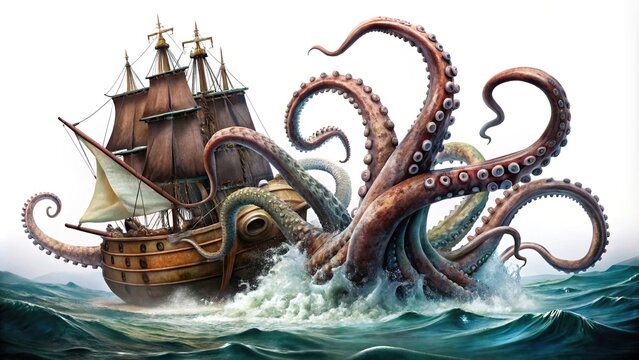
The Kraken’s Washday: Surviving the Spin Cycle at 10,000 Leagues
Imagine the swell of the ocean, the hum of the ship’s engine, and the low groan of steel as it cuts through salt-sprayed waves. Now add the surprisingly mundane: the clank of a metal tub, the whoosh of seawater, and someone hauling a load of dirty uniforms up to the deck for a rinse. Because even at sea, thousands of leagues from the nearest laundromat, clothes still need cleaning — and the story of how they get cleaned is every bit as wild as the sea.
The Historic Bubble: Washday on the High Seas
In the age of sail, “doing laundry aboard ship” was less about convenience and more about sheer improvisation and survival. Fresh water was a precious commodity — reserved for drinking, steam boilers, and maybe a rinse — so when it came to clothes, the seawater and wind-bleach routine ruled. Sailors would pump up seawater into buckets or tubs and wash on deck because freshwater simply wasn’t spared for that task.
It wasn’t glamorous. Tar-soaked tarpaulins, salt-rigid uniforms, and hammocks smelling of brine defined life aboard. One sailor remembered how he awakened one morning unable to move because the heat had liquefied tar sticking to his clothes.
And chores like laundry, sewing, and mending — traditionally domestic tasks on land — fell to the men afloat: deckhands and messmates trying to maintain some semblance of cleanliness in a floating, rocking hovel.
Fast-forward to the late 19th and early 20th centuries, when steamships and luxury liners began running laundry rooms below deck. The steam yacht Eleanor (built in 1894) had its own steam laundry onboard, along with fresh-water tanks and an ice-making plant. Even the famed Titanic struggled with laundry space; dirty linens were often sent ashore because fresh water was too limited to handle them onboard.
One maritime historian noted that laundry was “so mundane as to go unrecorded in most sources.” Which is exactly why it’s so fascinating — because even the smallest bubbles of routine can rise above the waves of history.
Sailors & the Saltwater Spin Cycle
Picture a square-rigged vessel in the South Atlantic circa 1800. The sails are full, the rigging creaks, and in a corner of the deck, a midshipman is scrubbing at a shirt in seawater while the ocean sprays salty foam over his boots. The practical truth: fresh water was too precious for such tasks, so seawater it was — often followed by wind-drying or sun-bleaching for a few hours.
Soap? Sometimes. Salt-water soap or basic detergent (even dish soap) worked better than nothing. Modern tall-ship crews still use variations of this method: soak in seawater overnight, scrub at dawn, and give the garments a quick freshwater rinse when the tanks allow it.
Laundry days often followed the ship’s rhythm — assigned by the captain or rotated among the messes. Uniforms, hammocks, and linen all had to be kept at least somewhat clean to ward off lice, infection, and dysentery.
So while the romance of sail says “sea-air is fresh,” the reality was more like “sea-cloth is stiff and smells like salt.” Folks wore things longer, washed less, and made do. But they still made sure their white shirts gleamed — at least when the cannons weren’t firing.
Submarines: Laundry Below the Surface
Now dive down into the belly of a ship — the submarine. Tight confines, recycled air, minimal fresh water, zero wind. Laundry aboard a sub is a logistical miracle paired with constant compromise.
In World War II, crews often hand-washed their clothes, wringing them out by hand in cramped quarters. The air was humid, the smell unforgettable, and the drying process nearly impossible. Modern submarines have compact washers, but space, power, and water are still tightly rationed. Laundry operates on rotation — scheduled like watch shifts — and everything, from socks to undershirts, must fit within strict limits.
When equipment fails, sailors get creative. On one destroyer, both washers broke down mid-mission. The crew helicoptered in a civilian washing machine from the nearest naval base, unboxed it on the tarmac, and plumbed it directly into the ship’s system. Where there’s grime, there’s a way.
Whether above or below waves, the message stays the same: laundry survives by hustle, innovation, and necessity.
Cruise Ships: Laundry Giants of the Deep
Now sail upward into luxury. Cruise ships are the laundromats of the ocean — floating cities that process thousands of pounds of linen every day. Towels, sheets, uniforms, napkins, tablecloths — everything cycles through enormous industrial washers running 24 hours a day.
Below deck, a cruise ship’s laundry department looks more like a factory than a basement. Conveyor belts shuttle loads from washers to dryers to pressers. Steam irons hiss constantly. Workers move with choreography that would make a Broadway director jealous. A large ship can clean over 50,000 items a day.
In earlier eras, even modest ocean liners employed full laundry crews. Steam laundries and pressing rooms thrived beneath decks. For first-class passengers, their shirts and linens were returned folded, pressed, and starched to perfection — with barely a hint of the mechanical mayhem it took to achieve that crispness.
Today’s ships still carry the same DNA: efficiency, order, and the quiet heroism of the laundry staff who keep a city clean while it moves.
The Technology & Engineering of Sea-Laundry
1. Water Sourcing & Conservation
On sailing ships, seawater was the rule — rinsing in fresh water was a luxury.
Steamships introduced desalination systems, while modern vessels use high-tech water-makers to convert seawater into freshwater. Submarines take recycling to the extreme: nearly every drop is reclaimed, filtered, and reused.
2. Washing Systems
The evolution is astonishing: from hand-scrub tubs on deck to full steam-powered laundries below deck, to automated systems on modern cruise liners. Today’s naval washers are compact, durable, and power-efficient — but still no match for a backed-up queue of tired uniforms.
3. Drying & Finishing
In the days of sail, drying meant hanging clothes on the rigging and hoping the wind didn’t take them. Modern ships rely on electric or gas dryers, pressing stations, and industrial folding machines that run nonstop.
4. Staffing & Logistics
In the 18th century, sailors rotated laundry duty among messes. By the 19th century, Royal Navy ships employed Chinese laundrymen — professionals who kept entire fleets looking sharp. Today, cruise lines staff entire laundry departments operating in shifts around the clock.
5. Practical Improvisation
Improvisation is the sailor’s specialty. From salt-water soaks to helicopter-delivered washers, maritime laundry has always been about making do — and making clean — under impossible conditions.
Why All This Laundry Matters (Beyond the Swish of Detergent)
For the average land-lubber, laundry is routine. For those at sea, it’s symbolic, functional, and sometimes existential.
Hygiene & Morale: Clean clothes mean fewer lice, fewer infections, and better spirits. On long voyages, clean socks can be the difference between misery and morale.
Identity & Uniformity: Uniforms define order, discipline, and hierarchy. A crisp shirt isn’t vanity — it’s control in chaos.
Resource Management: Water, power, and space are sacred resources. Every wash is a logistical equation.
Logistics & Supply Chain: Ships depend on smooth systems — if the laundry fails, everything downstream falters.
Human Stories: The sailor who folds a clean shirt, the worker pressing linens at 3 a.m., the cruiser slipping between fresh sheets — they’re all participating in the same quiet act of civilization.
Witty Bubbles of History & Anecdotes
- One maritime archivist called laundry “the detail so mundane no one thought to write it down.” Yet, it’s the detail that makes the myth.
- Ebenezer Fox, an early 19th-century sailor, once slept in tar-soaked clothes and woke up glued to the deck.
- Tall-ship trainees today still use salt-water soaks and open-deck drying — though the risk of losing a T-shirt to the wind remains high.
- The destroyer USS Carr famously flew in a household washer via helicopter when its machines broke down mid-deployment. Improvisation, meet innovation.
- In the Royal Navy, entire manuals were once written for onboard laundries, with assigned “Laundry Officers” and fleets of Chinese laundrymen handling millions of garments a year.
Every wave has a story, and every story has a washday.
For Land-Lubber Laundry Lovers: What We Can Borrow
You might think this maritime talk doesn’t apply to your coin-op back home, but there’s plenty to learn from sailors of the spin cycle:
- Efficiency Counts: On a ship, water and energy are precious. On land, the bills are too.
- Routine Matters: Scheduled loads keep chaos at bay.
- Adaptation Wins: Machines break; ingenuity saves.
- Meaning Hides in the Mundane: A clean shirt can anchor the soul.
- Morale Is Contagious: Whether at sea or in a laundromat, kindness and humor keep everyone afloat.
Final Spin
Out at sea — whether in a brisk wind on a schooner’s deck, deep beneath the waves in a submarine, or cruising across the Caribbean — the humble load of laundry becomes something bigger than soap and spin. It’s order in the chaos, sanity in isolation, and proof that humans cling to ritual, even in the vastness of the unknown.
Because no matter how far from land you drift, someone still has to fold the shirt, press the trousers, and rinse the salt from the cuffs. Onboard the greatest ship or in the smallest cabin, the act of cleaning is the act of caring.
Support The Laundry Club Blog — because even in the infinite blue of the ocean, your laundry deserves a story that travels.

 The Laundry Club Blog
Leave a comment