France’s Public Washhouses and the Heartbeat of Village Life
Laundry is never just about clothes. It’s about people, ritual, and the rhythms of daily life. In 18th- and 19th-century France, laundry wasn’t tucked away in a basement machine or folded quickly in front of the TV—it was out in the open, woven into the very fabric of the community.
These centers of suds and stories were called lavoirs—public washhouses built in nearly every French village. At first, women washed their clothes in rivers, fountains, or ponds. Kneeling at the water’s edge was grueling work, and the water sources weren’t always clean. But by the late 18th century, with populations growing and awareness rising about waterborne disease, villages began constructing dedicated washing facilities.
On February 3, 1851, the Assemblée Législative even passed a national subsidy—600,000 francs—to help cover construction costs. That’s how important lavoirs became. They were no less vital to a community than the town hall or the schoolhouse.
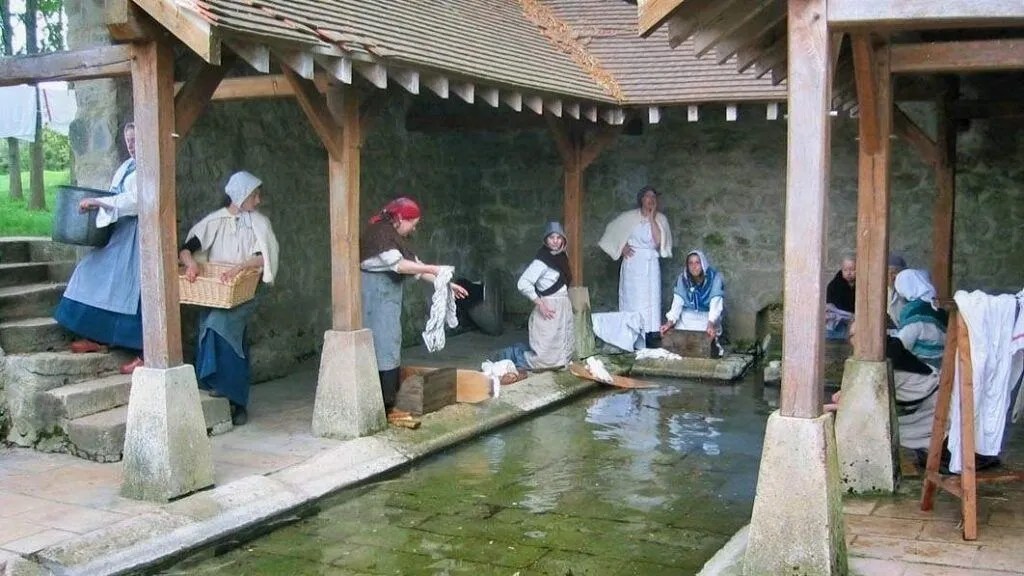
A Place Built for Work and Ritual
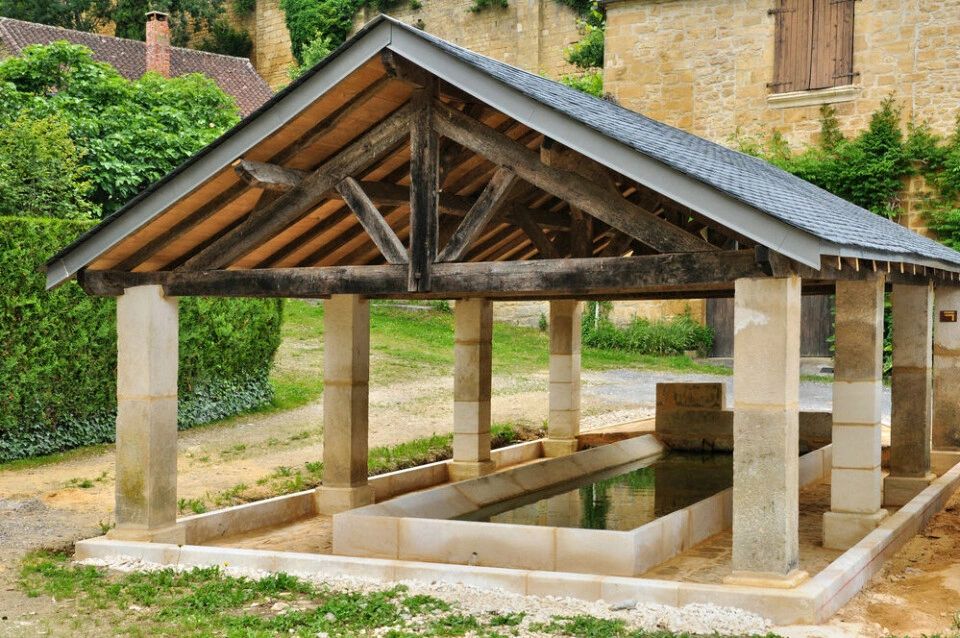
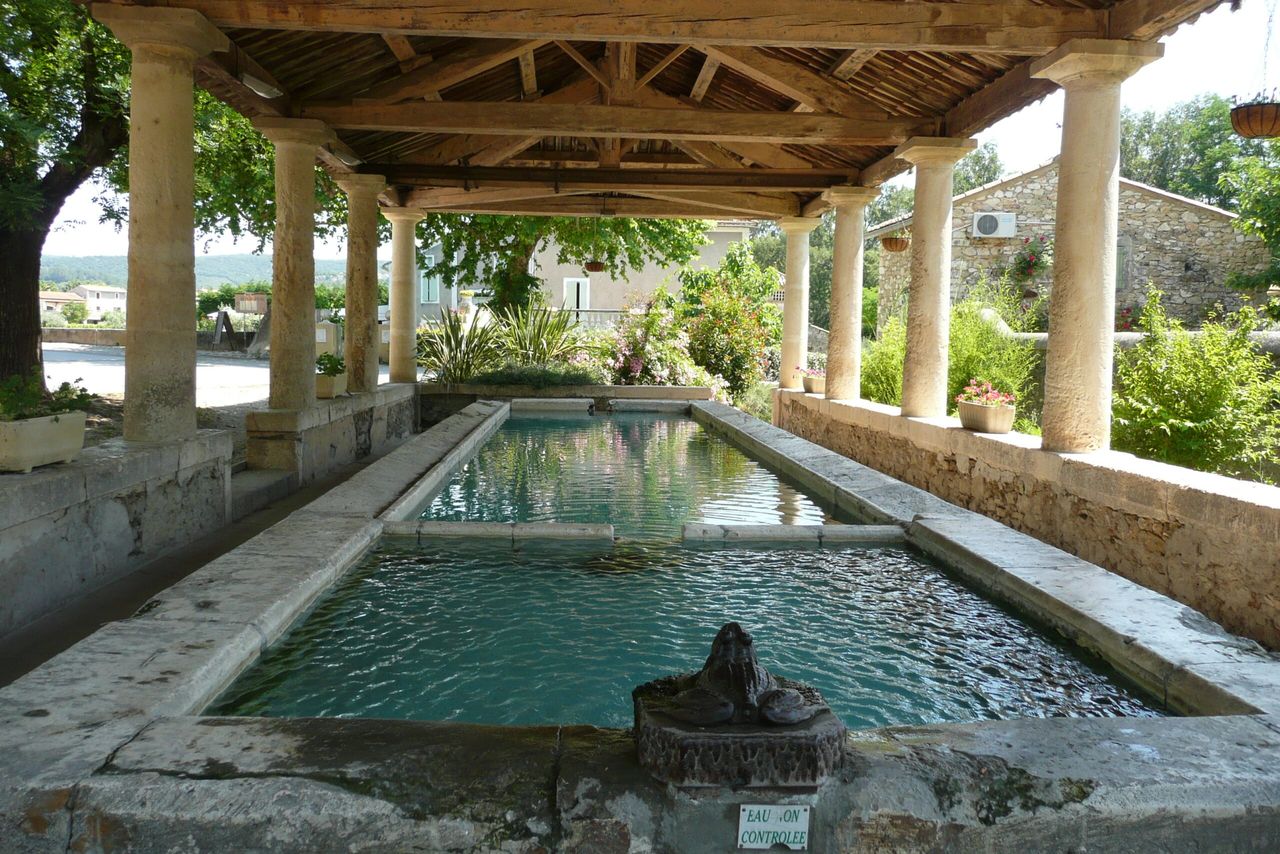
The architecture of a lavoir was thoughtful and practical. Most had two stone basins—one for washing and one for rinsing—set near a spring or river. The floors were often paved, with sloped edges so water could drain away. Some had chimneys so women could use ash for bleaching, or hooks and rafters for hanging laundry to dry. And when I say laundry, I don’t mean a quick load of t-shirts. We’re talking entire household linens—soaked, boiled, scrubbed with soap, then beaten against stone slabs with a wooden paddle called a battoir.
To protect their knees from hours of scrubbing, women used a carrosse or cabasson, a wooden box stuffed with straw that doubled as both cushion and shield from the cold, damp stone. Big “buées” (wash days for bedding and heavier linens) could last up to three days and often brought entire villages together.
More Than Laundry—It Was Community
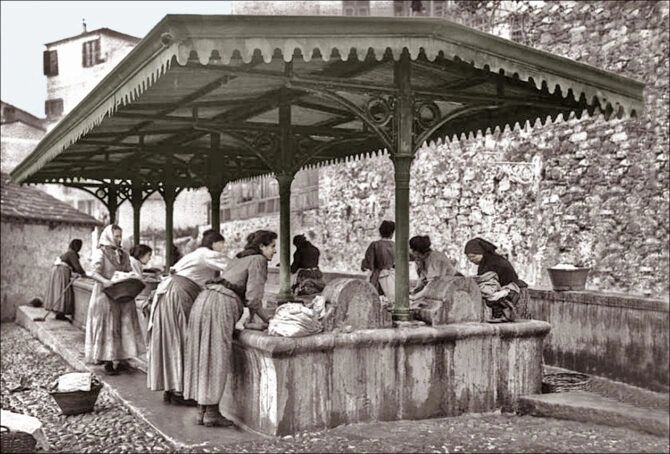
The lavoir was never just a washhouse. It was the village’s social stage. Men were banned, which turned the lavoir into a kind of all-female commons. Here, women sang, swapped news, passed down recipes and remedies, and yes—aired their dirty laundry in more ways than one. Napoleon himself famously advised in 1815, “Il faut laver son linge sale en famille” (“One must wash one’s dirty laundry at home”), but the women of France knew otherwise: the lavoir was where truths came out.
Some loads were light and daily—shirts, aprons, children’s garments—but the rhythm of bigger washings turned the lavoir into an almost sacred ritual, a marker in the seasons of domestic life. Imagine the splash of water, the rhythm of paddles against stone, the laughter and complaints rising together into the air. Laundry became a song of survival, solidarity, and shared womanhood.
From Decline to Heritage By the mid-20th century, the washing machine crept into French homes, rendering most lavoirs obsolete. But to this day, they are fiercely preserved as part of France’s petit patrimoine (small heritage). According to the Société pour la Protection des Paysages et de l’Esthétique de la France, conserving these humble washhouses protects not only their beauty but also their testimony: to ancient practices, community rituals, and the lives of the women who once gathered there.
There are currently more than 67 active lavoir restoration projects underway, ensuring that these stone basins continue to stand as reminders of the work and the women who filled them with suds and song. In 2017, TF1 featured Madame Francine Recouvreur, then 78, who still washed her linens in the lavoir of her village in Haute-Marne. She was dubbed la dernière lavandière de Sommermont—the last washerwoman of Sommermont. But perhaps she is not truly the last. Every preserved lavoir carries her echo.
Why Lavoirs Still Matter I can’t help but think about how laundry has always been a community act, even if today it feels more solitary. Whether in French lavoirs, American laundromats, or Shanghai courtyards, laundry has always been a place where people gather, share stories, and preserve dignity through clean clothes. It reminds me that even the most ordinary tasks can be acts of connection.
Next time you push that button on your washer or fold clothes at your own kitchen table, think of the women of the lavoirs—hands raw from scrubbing, voices strong with song, and hearts connected in community. Their laundry wasn’t just about linens. It was about life.
Final Spin
Laundry is never just laundry. In 18th- and 19th-century France, it was a lifeline, a gathering place, a chorus of voices rising above the sound of rushing water. The lavoirs remind us that even in the most mundane chores, there is beauty, tradition, and community. And maybe, just maybe, that’s the secret to why laundry continues to connect us across centuries.
If this story stirred something in you—if you felt the splash of water, heard the echo of paddles, or pictured the lavoirs as living memory—consider supporting this work. Every post is a modern tribute to the unseen labor, legacy, and shared humanity tucked into something as simple as laundry. Your support helps keep these stories alive, one wash at a time.

 The Laundry Club Blog
Leave a comment