Life skill.
Confidence builder.
Mental health booster.
Teaching laundry early does all three.

Parents often tell me, “I’ll just do it—showing them will take longer.” In the short term, you’re right. In the long term, giving your child regular, age-appropriate laundry jobs pays off in independence, smoother teen years, and better adult outcomes. Here’s the why and the how.
Why Laundry Belongs in Childhood
1) It builds self-efficacy (the belief “I can do hard things”).
Sorting colors, reading a care label, or getting a stubborn stain out is tangible proof that effort leads to results. Repeated mastery builds the internal voice kids need for school, friendships, and life: I can figure this out.
2) It strengthens executive function.
Laundry challenges planning (What loads do I run first?), working memory (Remember the detergent, settings, and the timer), and impulse control (Wait for the cycle to finish before grabbing the hoodie). These are the very skills that predict classroom success and later independence.
3) It connects chores to mental health.
Clean clothes reduce morning stress, social anxiety about appearance, and the last-minute scramble that raises family conflict. Kids also experience the calming rhythm of a predictable routine—sort → wash → dry → fold → put away.
4) It prepares kids for real life sooner than you think.
By late elementary school, most kids can safely run a machine with guidance. By middle school, they can manage their own end-to-end. When they leave home, laundry won’t be a mountain; it’ll be Tuesday.
Age-by-Age: Laundry Tasks That Grow With Your Child
Tip: Progress > perfection. Start small, keep it consistent, and celebrate effort.
Ages 2–3 • Carry socks to the hamper • Help match clean socks • Put small items into drawers
Ages 4–5 • Sort lights/darks • Load small items into the washer • Measure detergent with a pre-marked cup (hand-over-hand)
Ages 6–8 • Read simple care symbols together • Start the machine using a laminated “step card” • Move wet clothes to the dryer; clean the lint screen with guidance • Fold t‑shirts with a “two-fold” method
Ages 9–10 • Plan 1–2 loads for the week (sports gear, uniforms) • Treat basic stains (pre-treater + 5-minute soak) • Put laundry away in the right place
Ages 11–12 • Run full loads independently (select cycle, temperature, spin) • Change bedsheets; wash and remake the bed • Fold and store to a shared standard (KonMari/rectangle—pick one)
Ages 13+ • Own their laundry from hamper to hanger • Handle delicates, wool, or air-dry items • Plan ahead around activities (practice, work, packing)
The Hidden Curriculum: What Laundry Teaches Beyond Clothes
- Planning & time management: Working backward from “need clean uniform by Thursday.”
- Attention to detail: Reading labels, checking pockets, turning jeans inside-out.
- Delayed gratification: Waiting through a cycle—and then folding instead of scrolling.
- Contribution & empathy: Caring for shared linens and family items builds a sense of “we.”
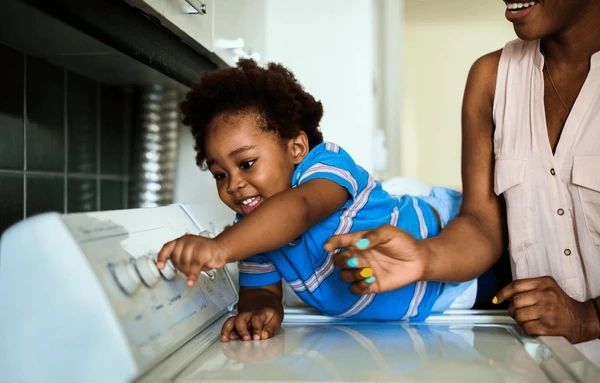
Mental Health Wins You’ll Notice
- Less morning panic: Kids who know what’s clean feel calmer getting dressed.
- More competence, less conflict: Clear roles (“Wednesdays are your laundry day”) reduce nagging.
- Cleaner spaces, clearer minds: A regular fold-and-put-away ritual pairs tidiness with a sense of control.
A 4-Week Quick-Start Plan (Parents + Kids)
Week 1: Observe & model
- Walk through each step out loud.
- Make a simple checklist and tape it above the machines.
Week 2: Co-pilot
- Child does each step with you nearby.
- Introduce safety basics: keep pods locked away; measure liquids; never climb in appliances.
Week 3: Takeoff
- Child runs 1–2 loads end-to-end; you spot-check.
- Teach stain triage: protein (cold water), oil (degreaser), dye transfer (color catcher + rewash).
Week 4: Own it
- Assign a recurring laundry time (calendar reminder).
- Add responsibility: sheets, sports gear, or family towels

Common Roadblocks (and How to Beat Them)
- “They’ll do it wrong.”Good! Mistakes are data. A pink sock teaches sorting once; a lecture teaches nothing.
- “We don’t have time.”Put laundry on the calendar and attach it to something you already do (after dinner on Wednesdays).
- “They forget.”Use a visible hamper, set a phone reminder, and post the checklist at kid-eye level.
- “They get overwhelmed.”Shrink the task: one category (socks) or one micro-skill (measuring detergent) until it’s easy.
Safety Snapshot
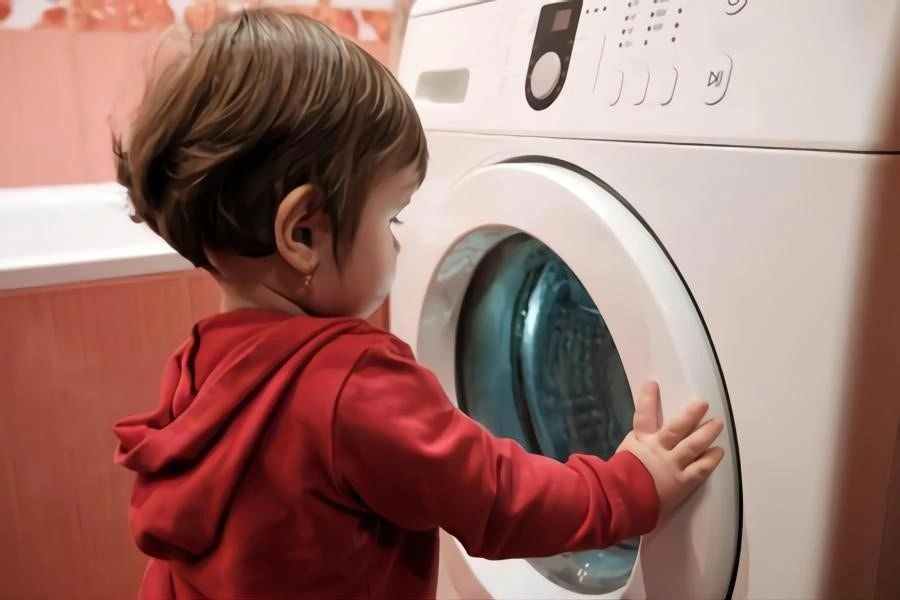
- Keep detergents and pods locked and out of reach.
- Use child-safe caps; supervise until step mastery is obvious.
- Teach appliance safety: no climbing, keep doors closed, and hands dry when plugging/unplugging.
Final Spin
Teaching laundry early isn’t about pristine t‑shirt folds. It’s about raising capable, confident kids whose everyday habits support mental health and adult success. Start now, start small, and keep it consistent—the dividends show up for years.
Support The Laundry Club Blog:
If this post inspired you to hand over the laundry basket (and maybe a little independence), toss a coin in the wash. Your support keeps The Laundry Club Blog spinning fresh ideas on life skills, mental health, and the magic hiding in everyday chores.

 The Laundry Club Blog
Leave a comment