When we picture First Ladies, we often imagine them in elegant gowns, hosting dignitaries, or delivering speeches on education or health. Rarely do we think of them hanging damp underclothes across the East Room of the White House. But one woman — America’s second First Lady, Abigail Adams — is remembered not just for her wit and intellect, but also for her laundry.
More surprisingly? Some say she still hasn’t stopped doing it.

Life in the Unfinished White House
In November 1800, President John Adams moved into the White House — then called the “President’s House” — a massive and still-unfinished building in the middle of a swampy D.C. landscape. With no central heating, sparse furnishings, and crude amenities, it was far from luxurious.
Abigail, ever practical and unfazed by hardship, made the best of it. Her letters to family members during this time provide fascinating glimpses into her daily life. Among other details, she mentions something quite unexpected:
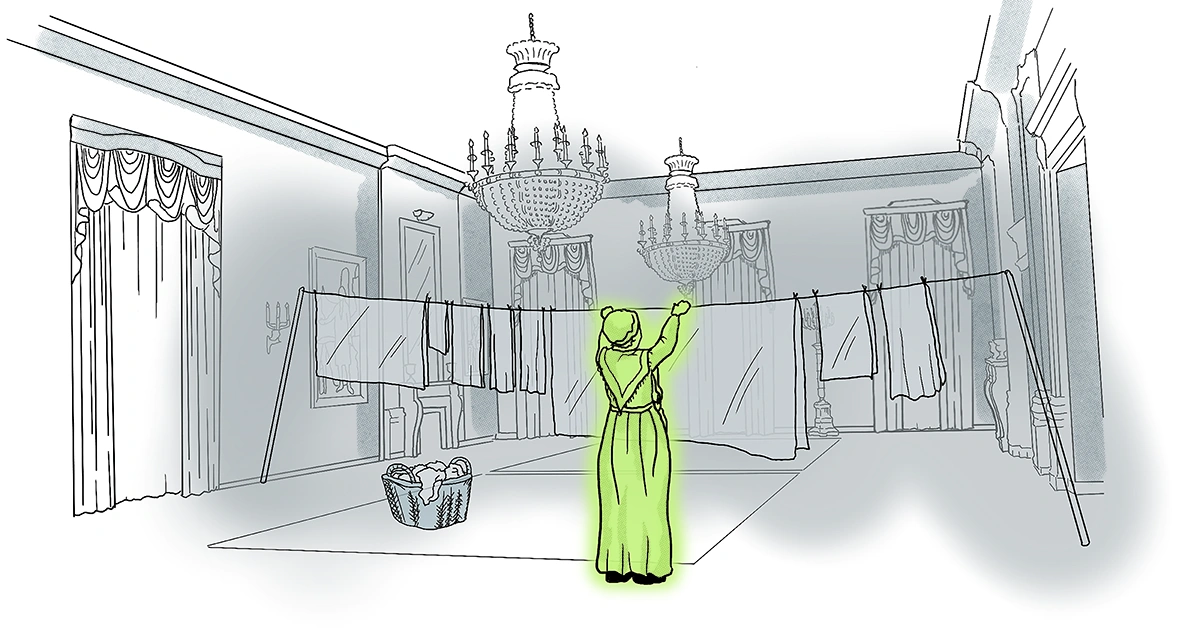
“The great unfinished audience room… I make a drying room of.” The “audience room” she referred to was none other than the East Room — now the ceremonial heart of the White House. At the time, though, it was drafty, unused, and ideal for suspending ropes across which laundry could dry.
First Lady… and Head Laundress?
Without a formal staff, Abigail Adams took on many domestic responsibilities herself. Washing clothes in the 1800s was no small feat. Soaking, scrubbing, boiling, rinsing, wringing, and finally drying. All by hand. In heavy wooden tubs. With lye soap and boiling water.
She likely wore a linen smock while doing this hard labor — one that would’ve been stained with ash and soap residue, stiff from the occasional splash of starch or drying paint. It was a world away from ballgowns and china sets.
Abigail’s laundry likely included personal linens, towels, John’s stockings and cravats, her own petticoats and shifts — all of it carefully scrubbed and hung up to dry beneath the unfinished ceiling of the East Room.
A Ghost with a Chore List
Fast forward two centuries. Over the years, White House staffers, tour guides, and guests have shared stories of eerie sightings and unexplained phenomena. One figure appears again and again: a woman in a high-necked dress, arms outstretched, drifting silently across the East Room.
Unlike some of the more menacing or mournful ghost stories associated with the White House, this one feels… almost maternal. She’s not pacing in grief or clanking chains. Instead, she seems preoccupied — intent on her routine, as if continuing her household duties in eternal service to a home she helped shape.
In several accounts, witnesses say she disappears into thin air, sometimes walking right through the wall, but not before leaving behind an unmistakable scent of soap and wet linen.
Why Would She Haunt the Laundry?
Ghost stories, especially those of historical figures, tend to cluster around places of trauma, strong emotion, or unfinished business. In Abigail’s case, her imprint seems different — a kind of domestic echo, a spiritual memory.
Perhaps she takes pride in having been the first to bring order to the cavernous new home. Perhaps she returns to the East Room not out of sorrow, but out of habit, love, or loyalty. After all, this was a woman who once told her husband to “remember the ladies” — and who was herself never content to sit idly by.
She wasn’t just a political partner to the second U.S. president. She was a homemaker, a manager, and yes — an early American laundry legend.
Final Spin: Clean Sheets, Chilly Breezes, and Chosen Duty
Whether or not you believe in ghosts, Abigail Adams’ presence in the East Room continues to inspire. She reminds us that the White House was once a family home — one where laundry day was real, and the First Lady herself might’ve had to scrub out a stubborn wine stain.
And maybe, just maybe, she’s still doing it.
Support The Laundry Club Blog – If this post gave you chills—or made you picture a ghostly First Lady wringing out stockings in the East Room—toss a coin in the wash bucket. Your support helps The Laundry Club Blog keep history spotless, one haunted load at a time.

 The Laundry Club Blog
Leave a comment