“Dirty Laundry” Exhibit Highlights Impact Of Fast Fashion
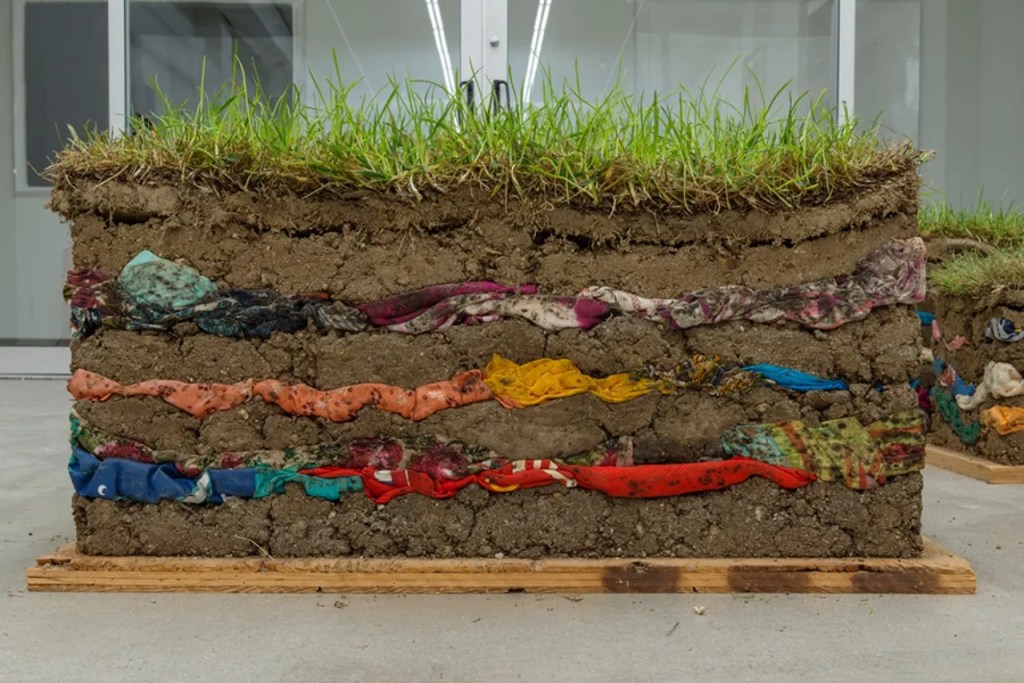
The San Luis Obispo Museum of Art (SLOMA) is drawing attention to one of the most pressing—and often overlooked—issues of our time: the environmental and social impact of fast fashion. This term describes the fashion industry’s relentless production of inexpensive clothing, designed for rapid consumption and frequent disposal. While trendy and affordable, these garments come at a hidden cost: millions of tons of discarded clothing clog landfills every year, synthetic fibers leaching chemicals into the soil and waterways, while human laborers endure harsh conditions to feed global demand.
Titled “Dirty Laundry,” the exhibition brings together the works of five California-based artists who explore the ecological and social consequences of our clothing habits through painting, sculpture, and mixed media. Each piece reflects a facet of the fast-fashion industry, from the overwhelming mountains of textiles that smother landfills to the human stories of exploitation behind the seams. Visitors are invited to not only witness these realities, but to feel them—walking through galleries that mirror the weight and chaos of our modern wardrobe culture.
Curator Courtney Davis carefully selected each artist for the exhibit, believing that art can spark critical conversations about the ways our daily choices ripple outward into the world. “Exhibitions are a powerful platform to discuss topics that deeply impact our Earth and the people who inhabit it,” Davis said. “Fashion isn’t just about what we wear—it’s about how we interact with the environment, with society, and with the labor that creates our clothes.”
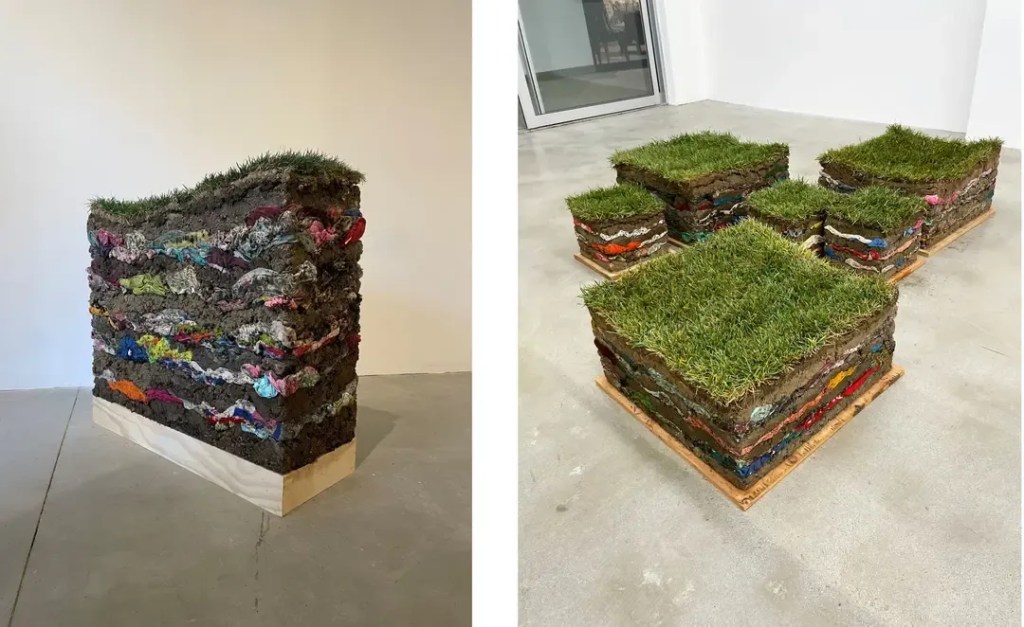
The show also emphasizes the human cost of fast fashion. Many garments are produced in developing countries where workers earn less than a living wage, often in unsafe conditions, to keep up with the constant demand for new styles. The environmental toll is staggering as well: the average American discards roughly 80 pounds of clothing each year, and globally, 60 percent of apparel is made from synthetic fibers derived from fossil fuels. These fibers resist decay, meaning most clothing that is thrown away will linger for decades, contributing to the mounting textile waste crisis.
Through “Dirty Laundry,” SLOMA offers a rare chance to pause and reflect on our relationship with what we wear. Each exhibit challenges viewers to question not only the origins of their clothes but also the life cycle of every shirt, dress, and pair of jeans. How much of what we buy truly serves us? How much costs the planet or the people who make it? The exhibition doesn’t just show what is discarded—it reveals the invisible threads connecting our wardrobes to global systems of production, consumption, and environmental impact.

Final Spin:
Next time you toss a T-shirt or dress into your shopping bag—or your laundry basket—pause for a moment. Consider the water, chemicals, and human hands that made it possible, and the unseen trail it leaves behind. The simple act of wearing and washing clothes is not just routine; it is an intimate connection to the world. And in that realization, perhaps there’s a spark of mindful change waiting in the folds of your laundry.

 The Laundry Club Blog
Leave a comment