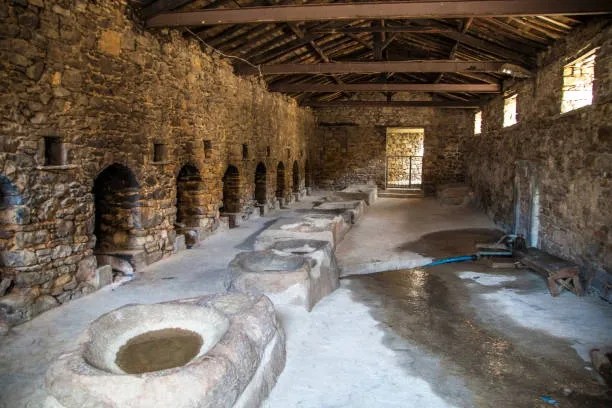
Dereköy Historical Greek Laundry – A Glimpse Into the Past
The Dereköy Historical Greek Laundry, located near the Hagia Panaghia Church in the village of Dereköy on Gökçeada (Imbros Island), is a fascinating example of traditional communal laundries once used by the local Greek population. These laundries, also found in other villages across the island, served a dual purpose: they were places for washing clothes and socializing, blending utility with community life.
The Island’s Unique Features
Gökçeada stands out among the Aegean islands for its abundant freshwater resources, a rarity in this region known for its arid landscapes. This abundance made it possible to build and maintain communal facilities like the Dereköy Laundry. Gökçeada is one of the largest and greenest islands in the Aegean, and its historical laundries reflect the harmonious relationship between the local community and the natural resources of the island.

Architectural Features of the Dereköy Laundry
The laundry is constructed in a rectangular shape using rubble stones, showcasing the traditional building techniques of the time. It remains the best-preserved laundromat on the island and is considered a monumental structure due to its historical and cultural significance.
Inside the laundry, several features are notable:
- Fountains: For drawing fresh water, essential for the washing process.
- Stoves: These were used for boiling water, a crucial step in deep cleaning and disinfecting clothes.
- Laundry Tubs: Large basins were built into the structure for scrubbing and rinsing garments.
- Storage Niches: Small alcoves were carved into the walls to hold washing supplies like soap, bowls, and brushes.
- Shower Areas: Separate spaces were designed for personal washing after the laundry work was done.
- Drainage Channels: Ingenious systems of channels and pipes directed dirty water out of the building, keeping the interior clean and functional.
These thoughtful designs reflect the community’s need for an efficient and organized system for managing daily chores.
Cultural Practices Surrounding Laundry Day
The communal laundry day was more than a chore—it was a social event. Women of the village would gather at the laundry on a designated day of the week, bringing not only their soiled clothes but also stories, laughter, and camaraderie. The process typically included:
- Washing Clothes: Women would scrub, rinse, and boil their laundry, working together and often helping one another.
- Personal Hygiene: After finishing the laundry, many would take the opportunity to wash themselves in the designated shower areas.
- Socializing: Laundry day was a chance to exchange news, discuss village life, and strengthen bonds among the community.
This tradition highlights the role of laundries as centers of community life, especially for women, who often bore the responsibility for household tasks.
Historical Context and Preservation
Dereköy, once one of the largest villages on Gökçeada, was predominantly inhabited by Greek families until the mid-20th century. The village and its laundry reflect a bygone era when traditional practices were a cornerstone of daily life. Over time, political and social changes led to the decline of the Greek population on the island, and many of the communal laundries fell into disuse. However, the Dereköy Laundry remains a well-preserved testament to this rich heritage.
Efforts to preserve such structures emphasize their importance not only as historical landmarks but also as symbols of cultural identity. Today, the Dereköy Laundry stands as a reminder of the simpler, more communal ways of life and offers visitors a chance to step back in time and appreciate the ingenuity and traditions of the island’s former Greek inhabitants.
Significance of the Location
The proximity of the laundry to Hagia Panaghia Church suggests its integration into the spiritual and social life of the village. Churches often served as focal points of village communities, and the laundry’s location near this sacred site underscores its role in daily routines and community gatherings.
Final Spin
The Dereköy Historical Greek Laundry is more than a building; it’s a window into the rhythms of daily life and community on Gökçeada. From the carefully designed tubs and stoves to the ingenious drainage channels, every feature reflects a harmony between practicality and social connection. Laundry day was not merely a chore—it was a gathering of stories, laughter, and shared labor, a space where women upheld both their households and the bonds of their village.
Today, the preserved stone walls and fountains stand as a quiet testament to a bygone era, inviting visitors to step into a world where washing clothes was both an act of care and a celebration of communal life. It reminds us that even the simplest routines carry profound cultural significance, and that heritage lives not just in monuments but in the daily practices that shaped communities.
Support The Laundry Club Blog — because preserving the stories behind these remarkable spaces keeps their legacy alive for generations to come.

 The Laundry Club Blog
Leave a comment