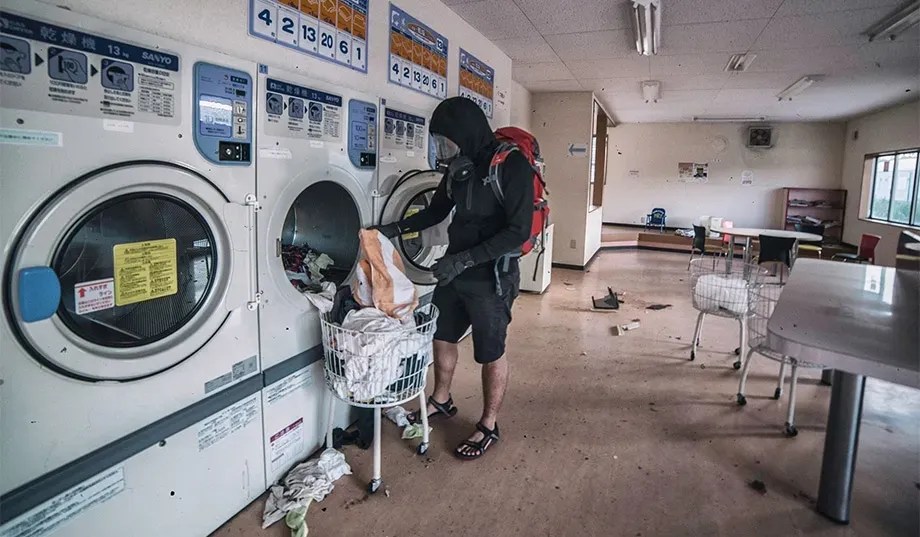
The laundromats of Fukushima, Japan, offer a haunting snapshot of lives interrupted, their silence echoing through a space once filled with the hum of machines and the soft chatter of neighbors. When the catastrophic earthquake and nuclear disaster struck in March 2011, residents were forced to flee with little more than the clothes on their backs. Among the abandoned buildings of the exclusion zone, laundromats stand out, their machines still filled with clothes, and 100-yen coins scattered across counters and floors—a silent record of routines abruptly paused.
The disaster itself was monumental: a 9.0-magnitude earthquake followed by a devastating tsunami, which triggered one of the worst nuclear crises in history, rivaling Chernobyl. The evacuation was urgent and chaotic. Families fled, sometimes leaving behind decades of belongings, meals mid-preparation, and chores left unfinished. In this chaos, laundromats became frozen in time, their everyday significance amplified by the sudden absence of those who relied on them.
Step inside one of these spaces, and the imagery is both mundane and surreal. Rows of washing machines, some still holding wet clothes, are coated in dust and rust, frozen mid-cycle like snapshots of interrupted lives. It’s easy to imagine the stories behind each load. Perhaps a mother had just dropped her child’s school uniform into the washer, humming softly as she tried to scrape away yesterday’s mud. A salaryman may have tossed his work shirt into a machine before heading home, unaware he would never return. A retiree, fond of routine, could have been folding a favorite sweater, pausing mid-motion to chat with a friend—only to vanish from this world of daily rituals. Each garment, each coin, each basket is a relic of ordinary life made extraordinary by its sudden stillness.
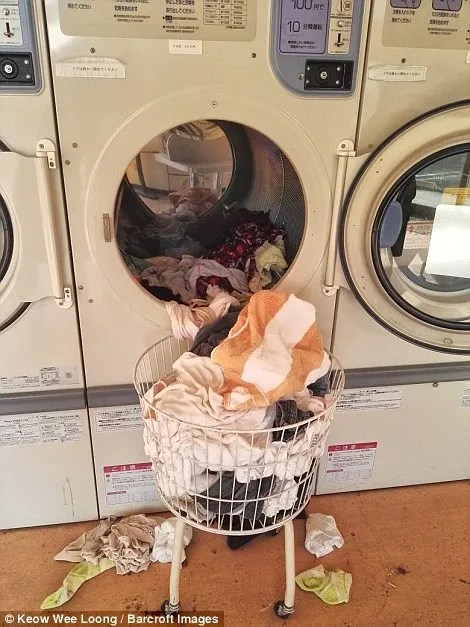
The silence in these laundromats is almost deafening. Baskets lie scattered on the floor, their contents waiting to be folded, washed, or returned to drawers that no longer exist. Dust blankets machines and counters, and the scent of decay—rotting vegetation, musty water, and the faint tang of metal—fills the air. Yet even in this dereliction, there is a human trace. A lone sock clings to the edge of a washer, as if reluctant to leave; a child’s patterned shirt drapes over a basket, color still vibrant against layers of dust. These small details suggest lives that were lived, interrupted not by choice but by catastrophe.
Laundry, in its quiet repetition, represents care, continuity, and preparation for the day ahead. The sight of unfinished laundry abandoned in Fukushima’s laundromats strikes a uniquely personal chord: it is the evidence of daily life upended. These machines, these garments, were intimately tied to the people who once used them. They tell stories of parents, workers, and friends, of routines filled with mundane but essential care. A load of school uniforms isn’t just cloth—it’s a morning ritual, a mother’s devotion, a child’s preparation for the world outside. A set of work shirts speaks of labor and pride, of evenings spent unwinding after a hard day. These human stories remain, etched into every discarded item, every coin, every untouched folding table.

Nature is slowly reclaiming these spaces. Vines creep through shattered windows, rust consumes the edges of washers, and dust settles into the grooves of forgotten machines. Yet even as the environment encroaches, the laundromats persist as monuments to resilience and memory. They capture a unique tension between absence and presence—proof that even in the wake of tragedy, traces of life endure.
Reflecting on these laundromats reminds us of the deep connection between people and place. A laundromat may seem ordinary, but in Fukushima, it becomes a canvas of human history, a silent witness to lives interrupted and routines abandoned. Each image, each forgotten sock, each coin left behind is a small echo of the people who once moved through these spaces, reminding us of the fragility of daily life and the quiet strength inherent in ordinary acts.
Final Spin
The laundromats of Fukushima, Japan, stand as silent witnesses to lives abruptly interrupted. When the devastating earthquake and nuclear disaster struck in 2011, residents were forced to abandon their homes, possessions, and routines. Among the many structures left behind in the exclusion zone, laundromats hold a uniquely haunting presence. Rows of washing machines, some still holding wet clothes, and 100-yen coins scattered across counters and floors, freeze moments of everyday life in time.
These machines, once symbols of daily care and routine, now tell stories of lives upended. Perhaps a mother had just loaded her child’s uniform into a washer, or a worker had set a shirt aside after a long day, unaware they would never return. Baskets of laundry lie untouched, dust coating machines and floors, while the faint scent of decay hints at the passage of time. Even the smallest details—a sock clinging to a washer drum or a sweater draped over a basket—serve as remnants of human presence.
Laundry, in its quiet repetition, represents care, order, and preparation for what comes next. In Fukushima’s abandoned laundromats, unfinished laundry symbolizes life interrupted. These spaces, slowly reclaimed by nature with vines creeping through shattered windows and rust overtaking metal surfaces, are monuments to resilience and loss. They remind us of how deeply our lives are intertwined with the places we inhabit, and how ordinary acts—like washing and folding clothes—carry profound meaning.
In the end, these laundromats are more than abandoned buildings; they are echoes of humanity, frozen in time, whispering stories of daily life, community, and the quiet strength of those who once moved through them.
Support The Laundry Club Blog — because every story, every garment, and every moment frozen in time deserves to be remembered.


 The Laundry Club Blog
Leave a comment