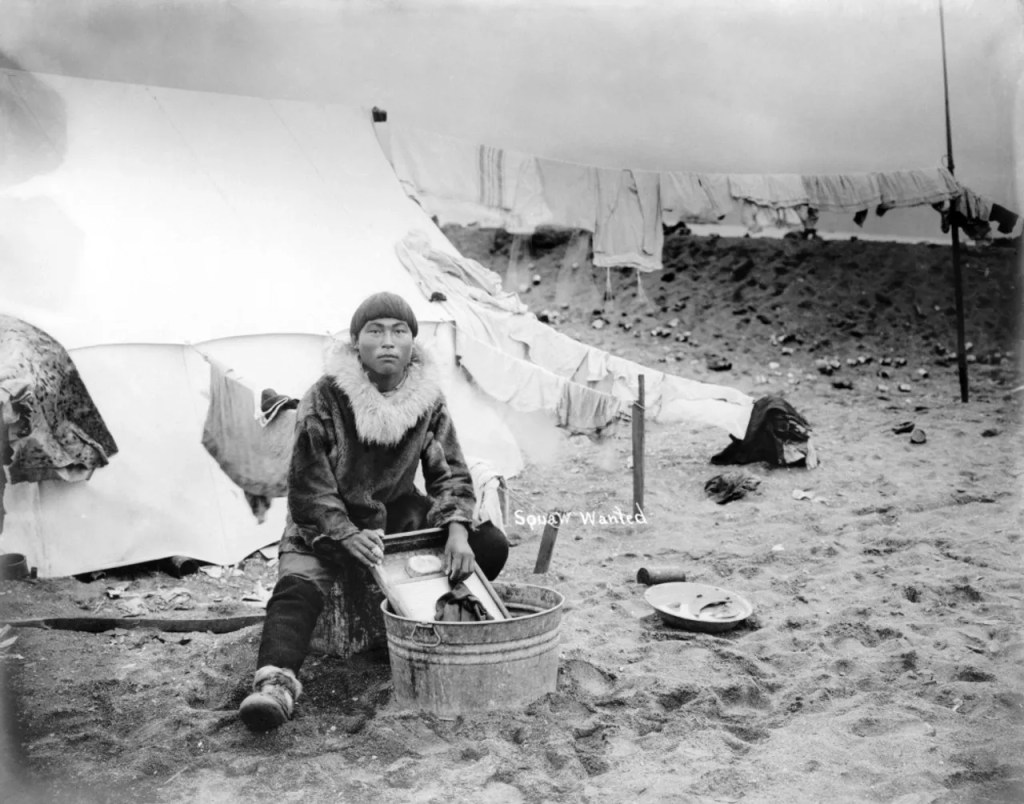
Alaska: Eskimo, C1906. /Nan Inuit Man Doing Laundry In Tub Outside His Tent, With Clothes Hanging To Dry In The Background, Nome, Alaska. Photograph, C1906.
In the early 20th century, daily life in Alaska for the Inuit people, often referred to as Eskimos in historical texts, was deeply tied to their environment and the challenges of the Arctic climate. The photograph of an Inuit man doing laundry outside his tent in Nome, Alaska, circa 1906, provides a fascinating glimpse into the interplay between traditional lifestyles and the adaptations required by emerging contact with Western influences.
The Inuit Way of Life
The Inuit, skilled hunters, gatherers, and fishers, lived in harmony with their harsh surroundings. Their resourcefulness allowed them to thrive despite extreme cold and limited resources. Clothing, typically made from animal hides such as seal, caribou, or polar bear fur, was essential for survival. Garments were crafted to provide insulation, protect against wind and moisture, and were often decorated with intricate patterns that reflected cultural heritage. Maintaining these garments was critical, as they were not easily replaceable.
Doing Laundry in 1906
During this period, laundry processes were labor-intensive and required creativity to accommodate limited supplies and frigid conditions. The photograph of the Inuit man washing clothes in a tub outside his tent indicates a blend of traditional practices and adopted methods introduced by Western settlers. Nome, Alaska, became a hub of activity during the Gold Rush, and with it came new technologies and goods, including metal washtubs, soap, and cloth garments.
The laundry process in this era began with boiling water, often heated over an open fire or a wood stove. In Nome, where wood and other fuels were scarce, driftwood or whale oil lamps might have been used to generate heat. Detergents as we know them were unavailable; soap was either homemade from animal fat and lye or obtained through trade. Once the water was ready, clothes would be agitated in the tub, either by hand or using a washing bat or paddle, which helped remove dirt and stains.
After washing, rinsing the garments in clean water was necessary to remove soap residue. This posed challenges in sub-zero temperatures, as water would quickly freeze. Efficient wringing of clothes was essential before hanging them to dry. In the background of the photograph, clothes hanging to dry indicate an awareness of airflow and sunlight as natural drying agents. Despite the cold, garments could dry in freezing temperatures through a process called sublimation, where ice crystals evaporate directly into water vapor without becoming liquid.
Cultural Adaptations and Resilience
This scene highlights the adaptability of the Inuit people. While they had traditionally used animal skins and furs that required scraping, softening, and smoking for maintenance, the introduction of woven fabrics meant they had to learn new techniques for washing and caring for textiles. This blending of traditional and modern practices underscores the resilience of the Inuit as they navigated a rapidly changing world.
In sum, this photograph captures more than just a mundane chore—it reflects a unique moment in time when indigenous traditions met the modern world. The image of an Inuit man doing laundry is a powerful reminder of the ingenuity and perseverance required to survive and adapt in one of the planet’s most unforgiving environments.

Alaska: Eskimo Woman. /Nan Eskimo Woman Sitting Outside Cleaning Hair Off Of A Hide, Nome, Alaska. Photograph, C1929
An Eskimo woman sits outside, her hands carefully at work cleaning hair off a hide in the crisp air of Nome, Alaska. Captured in 1929, this photograph offers a window into a way of life deeply connected to the land and its resources. Dressed in traditional attire suited to the cold climate, her fur-lined garments reflect both functionality and a deep cultural heritage. The hide before her is likely part of a larger process—perhaps preparing material for clothing, shelter, or trade. Every movement she makes is deliberate, embodying generations of knowledge passed down through her ancestors.
The setting around her, though not visible in detail, hints at the rugged landscape of Nome, with its vast, treeless expanse and the ever-present bite of Arctic winds. This moment, frozen in time, speaks volumes about resilience, resourcefulness, and the intricate balance of survival in one of the world’s harshest environments. The photograph captures not just her labor but also a cultural narrative—a glimpse into the lives of indigenous Alaskan women during the early 20th century. It’s a powerful testament to their ingenuity and the unyielding bond between the Eskimo people and the natural world that shapes their existence.
Final Spin:
This 1929 photograph of an Eskimo woman in Nome, Alaska, is more than an image—it’s a story etched in fur, hide, and patient hands. As she carefully removes hair from the hide, we witness a ritual of survival and skill honed over generations. Each movement speaks of resilience, ingenuity, and a deep understanding of the natural world that surrounds her. In the Arctic’s stark expanse, where life is both fragile and demanding, her work embodies the quiet strength and resourcefulness of indigenous Alaskan women. It’s a moment that bridges time, connecting us to a culture rooted in respect for the land and the labor that sustains it.
Even in the chill of Nome’s winds, there is warmth in tradition, purpose, and the enduring human spirit.
Support The Laundry Club Blog — because every thread of history deserves to be honored, carefully cleaned, and displayed.

 The Laundry Club Blog
Leave a comment