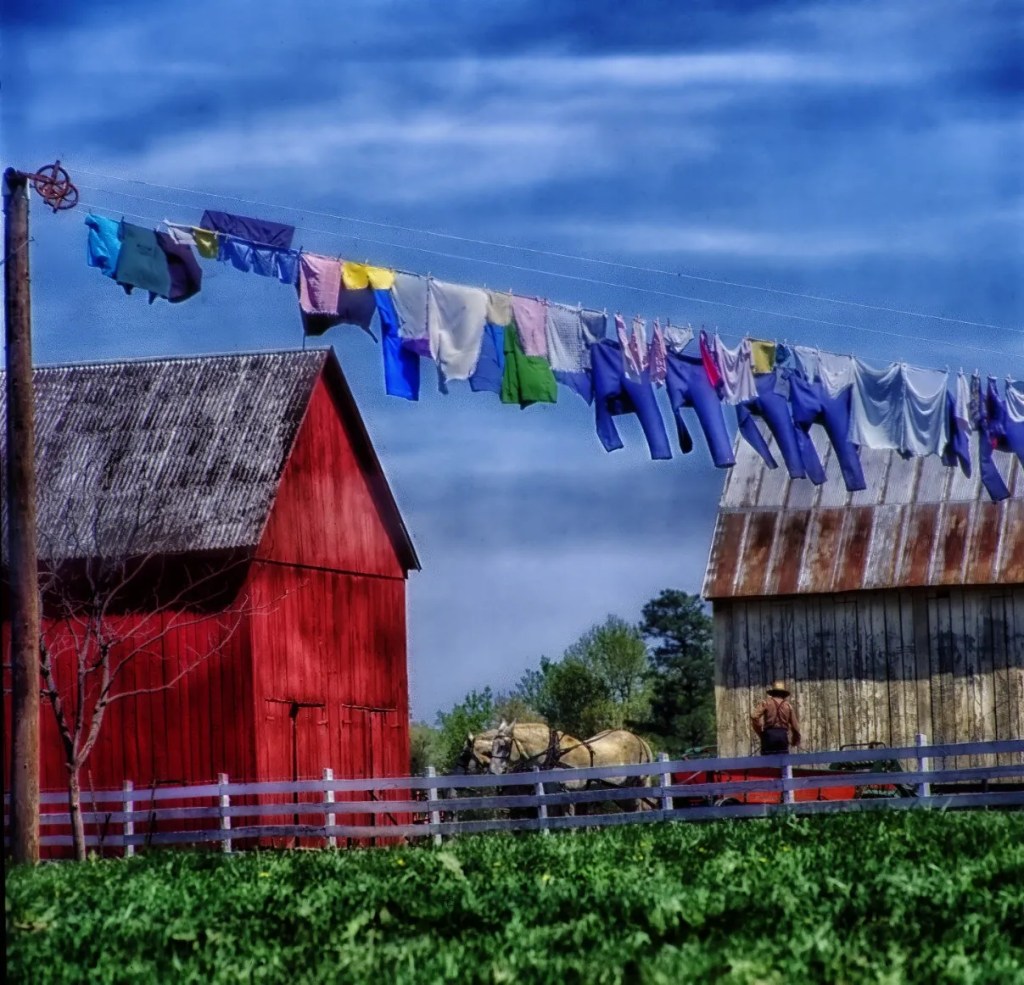
When visiting an Amish community, one of the most iconic sights is the ubiquitous clotheslines, often stretching high into the trees and adorned with neatly hung pants, shirts, and dresses in a spectrum of muted yet vibrant colors. These lines, swaying gently in the breeze, offer a glimpse into a lifestyle rooted in tradition and simplicity. This hallmark image of Amish society is a result of deliberate, collective decisions to forgo public electricity, reflecting their commitment to separate themselves from the influences of modern technology.
The Responsibility of Laundry
In Amish households, the responsibility for doing laundry typically falls to the housewives, who shoulder the daily tasks of running a home with remarkable efficiency. Laundry is not simply an occasional chore but a cornerstone of Amish domestic life, with many women adhering to a set schedule. In numerous communities, Monday is widely recognized as laundry day. This practice stems from the need to prioritize other responsibilities—Sundays are reserved for worship and rest, with only essential tasks like milking cows permitted. Saturdays are often dedicated to preparing for church, which includes washing buggies, tidying up the home, and ensuring everything is ready for the weekly gathering.
Laundry for an Amish family, however, is no small undertaking. With an average of six to seven children per household—and some families boasting as many as eight to ten or more—clothing accumulates quickly. Add to this the wear and tear of farm life and manual labor, and it’s easy to see how piles of soiled garments can become mountainous. For the Amish housewife, getting through the weekly wash is a feat of both physical labor and time management.
The Role of Technology: Wringer Washers
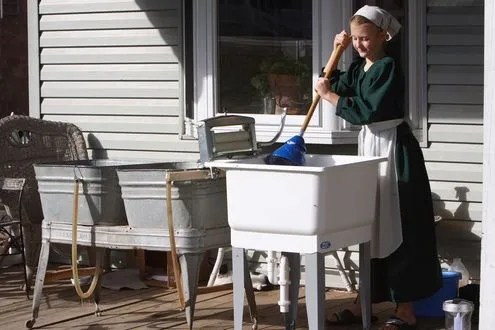
Fortunately, Amish women have access to a key piece of technology that simplifies their workload: the classic wringer washer. These machines, once a staple in American households during the mid-20th century, are favored for their durability and straightforward design. They are perfectly suited to Amish life because they can be adapted to operate within the technological limitations of the community.
Since Amish homes do not rely on public electricity, how are these machines powered? Most Amish use a diesel generator, which either produces electricity for the washer or drives a pneumatic (air-powered) motor. This setup, while noisy and requiring some effort to maintain, represents a practical compromise between convenience and adherence to their values. A typical laundry day may involve running several loads to keep up with the demands of a large household.
Interestingly, the Amish have also carved out a niche industry around these machines. In many larger settlements, Amish-owned businesses sell and repair wringer washers, particularly those of the Maytag brand. This type of business, much like those producing horse-drawn carriages or other seemingly obsolete technologies, has not only survived but thrived in Amish society. It’s a testament to their ability to preserve and adapt traditional ways of life.
Drying Clothes the Amish Way
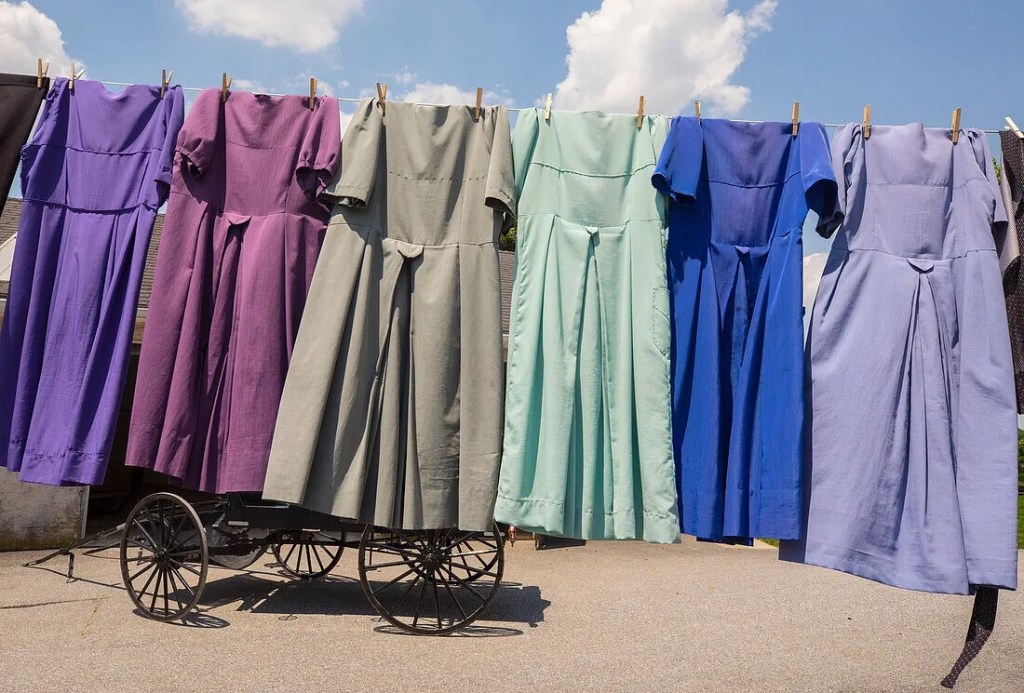
Once the washing is done, the next step—drying—adds another layer of effort to the process. Unlike most modern households, Amish families do not use mechanical dryers. Some, however, make use of “spinners,” which rapidly spin clothes to extract excess water, thereby shortening drying times. Beyond this modest concession, drying is done the old-fashioned way: hanging clothes out to dry.
Nearly every Amish yard is equipped with a clothesline. Many are the familiar “T” style, with lines strung at eye level. However, in larger households or settlements where outdoor space is limited, a more ingenious solution is often employed. This is the pulley-operated clothesline, an innovation credited to an Amishman. These lines stretch from a point near the house to a high perch, such as a tree or the side of a barn, and allow the housewife to hang or retrieve clothes by turning a crank. This setup not only conserves lawn space but also accommodates the large volume of laundry typical in Amish homes.

Challenges of Traditional Drying
While this method is practical and efficient, it’s also subject to the whims of nature. Rainy days, for example, can put a damper on plans for hanging laundry outdoors. In such cases, Amish homemakers may string smaller loads beneath overhangs or inside enclosed porches to ensure their families have clean, dry clothing.
When time or weather doesn’t cooperate, Amish women sometimes turn to a surprising solution: the local laundromat. While rare, it’s not unheard of to spot an Amish woman discreetly doing a small “emergency” load in town. This might happen when rain persists for days, making outdoor drying impossible, or when urgent circumstances require a quicker turnaround than their traditional methods allow.
A Testament to Amish Ingenuity
From the high-reaching clotheslines to the hum of diesel-powered wringer washers, Amish laundry practices illustrate their resourcefulness and ability to balance practicality with tradition. The simple act of doing laundry reflects their broader values—dedication to family, community, and a lifestyle that prioritizes hard work and faith. For visitors, those waving lines of freshly washed clothing are more than a picturesque sight—they are a window into the rhythm of Amish life, where even the most mundane tasks are carried out with intention and care.
Final Spin:
Laundry in Amish life is more than a household chore—it’s a ritual of rhythm and resilience, woven into the fabric of their faith and simplicity. Each neatly hung shirt, each fluttering bonnet on the line, tells a story of discipline, balance, and devotion to family and community. While the rest of the world speeds ahead with high-efficiency machines and quick-dry cycles, the Amish remind us that there is beauty in slowing down, in letting the wind and sun do their part. Their way of washing clothes is a quiet resistance to modern chaos—a gentle spin cycle of patience, faith, and purpose.
Support The Laundry Club Blog — because sometimes, the cleanest perspective comes from the simplest wash.

 The Laundry Club Blog
Leave a comment