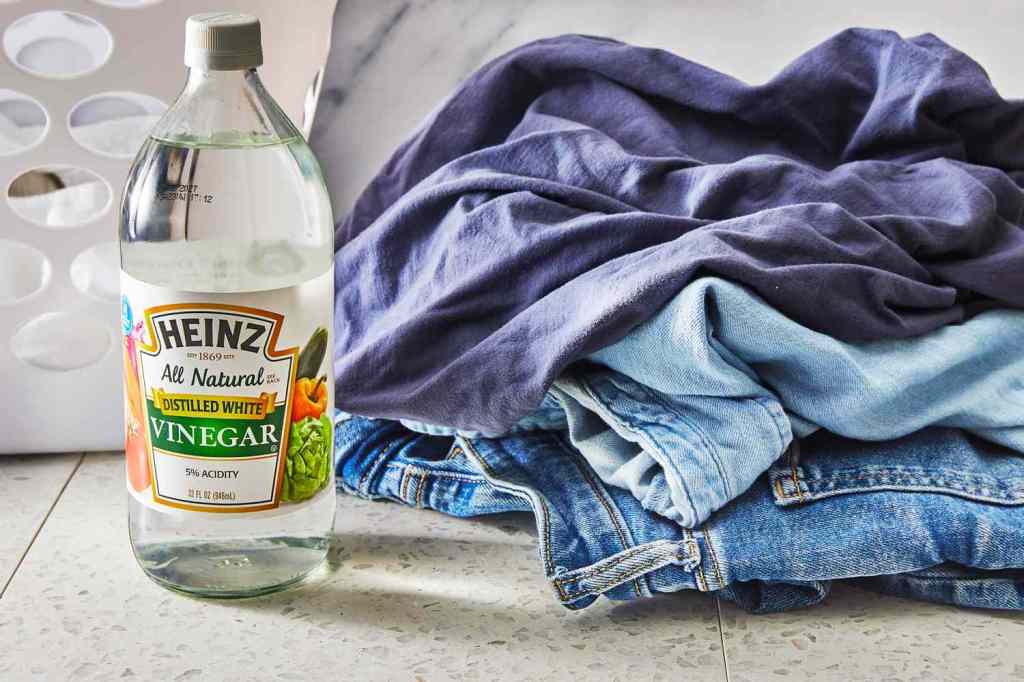
If regular detergent isn’t cutting it anymore, grab that bottle of white vinegar hiding in your pantry. This unassuming kitchen staple can brighten clothes, remove stains, neutralize odors, and even soften fabrics—all without the fancy packaging or steep price tag. It sounds like a miracle product (and it often is), but like any cleaning powerhouse, it needs to be used wisely. Vinegar isn’t suited for every fabric, and too much of a good thing can leave its mark. When used correctly, though, it can completely change how your laundry looks, feels, and smells.
The Clean Truth: Why Vinegar Works
It Removes Stains
Tough stains meet their match with vinegar. Especially on white fabrics, it works wonders as a pre-soak or a direct additive to your wash. “Vinegar can tackle stubborn stains by being added directly to your laundry or used as part of a pre-treating soaking solution,” says Morgan LaLonde, laundry brand manager for Whirlpool. It’s great for oil-based messes, grass streaks, rust spots, and even that forgotten coffee drip.
It Fights Mildew
Forgot your wet towels in the washer? We’ve all done it. That damp, musty smell that follows can be tamed with vinegar. “Because white vinegar is an acidic solution, its deodorizing and stain-removing properties also often work on mildew,” LaLonde explains. Pre-treating the problem areas gives the best results and helps rescue what you thought was a lost cause.
It Neutralizes Odors
Vinegar doesn’t mask smells—it neutralizes them. Sweat, gym funk, kitchen towels… vinegar doesn’t judge. “A quick vinegar rinse or soak can help break down even the worst smells,” says Kathy Cohoon of Two Maids. It’s like a reset button for your clothes.
It Softens Fabric Naturally
If your laundry feels stiff or scratchy, vinegar can break down leftover detergent residue that’s weighing down your fabrics. “Vinegar softens clothes by breaking down excess detergent that remains, making clothes feel stiff,” says Patric Richardson of The Laundry Evangelist. Think of it as hitting “refresh” on your fabrics—no artificial fragrances required.
When to Skip the Vinegar
When You’re Using Bleach
Never—ever—mix vinegar with bleach. The reaction creates toxic fumes that are dangerous to inhale. Both products have whitening properties, but they don’t play well together.
On Elastic or Activewear
Elastic fibers don’t love acid. Over time, vinegar can wear them down. “Elastic or exercise clothing can be worn down over time, since the acid can break down the elastics,” warns Cohoon. If you must use it, dilute it heavily and only when absolutely necessary.
How Often to Use It
Less is more. Limit vinegar use to every other week or just when needed for deep cleaning or odor removal. “Using too much vinegar over time takes a toll on your delicate fabrics,” LaLonde advises. A little goes a long way—think of it as a laundry tune-up, not a lifestyle.
How to Use Vinegar in Your Wash
There are two simple ways to add vinegar to your laundry routine:
- Add it to the fabric softener dispenser. This releases the vinegar during the rinse cycle automatically.
- Do a manual rinse. Pause your washer right before the final rinse and add ½ cup of diluted white vinegar. Let it spin out as usual for soft, fresh results.
If You’re Out of Vinegar
No vinegar? No problem. Baking soda is a solid stand-in. It whitens, brightens, and neutralizes odors. “Baking soda can act as a bleach alternative to whiten garments or brighten colorful fabrics,” says LaLonde. Oxygen bleach is another effective option for odor and mold removal—and it’s gentler on delicate materials.
Final Spin
Sometimes, the best laundry solutions are the ones your grandmother already knew. White vinegar is proof that simplicity still works—when used thoughtfully. Keep it as your secret weapon for the stubborn, the stinky, and the stiff. Just remember: moderation matters.
If you enjoy The Laundry Club: Dirty Laundry and want to keep this spin cycle going, you can support the blog here.

 The Laundry Club Blog
Leave a comment